


Key Takeaways
- Your coverage needs can change year to year, so a renewal review is worth doing every cycle.
- Premiums can shift at renewal even if you filed no claims; several factors drive those changes.
- Confirm every driver in your household is listed and every vehicle matches current use.
- Liability limits set before a major life change may no longer reflect your actual exposure.
- Reading the declarations page alongside the full policy document catches gaps the summary misses.
Summary
18 items · 20 to 45 minutes
Why a renewal review is worth your time
Auto insurers reassess your rate at every renewal. Your premium can change because of shifts in local claim trends, changes to your credit-based insurance score (where state law permits), or adjustments to your vehicle's risk classification. None of those require you to have filed a claim. Skipping the review means you may pay more than you expect or carry limits that no longer fit your situation.
This checklist walks through the documents to gather, the coverage details to verify, and the questions to ask before you accept the renewal. It applies whether your policy renews every six months or every twelve. The process is general financial education; for guidance specific to your situation, consult a licensed insurance agent.
Working through the checklist
Before you start, gather the documents listed below. Having everything in front of you keeps the review focused and avoids back-and-forth with your insurer.
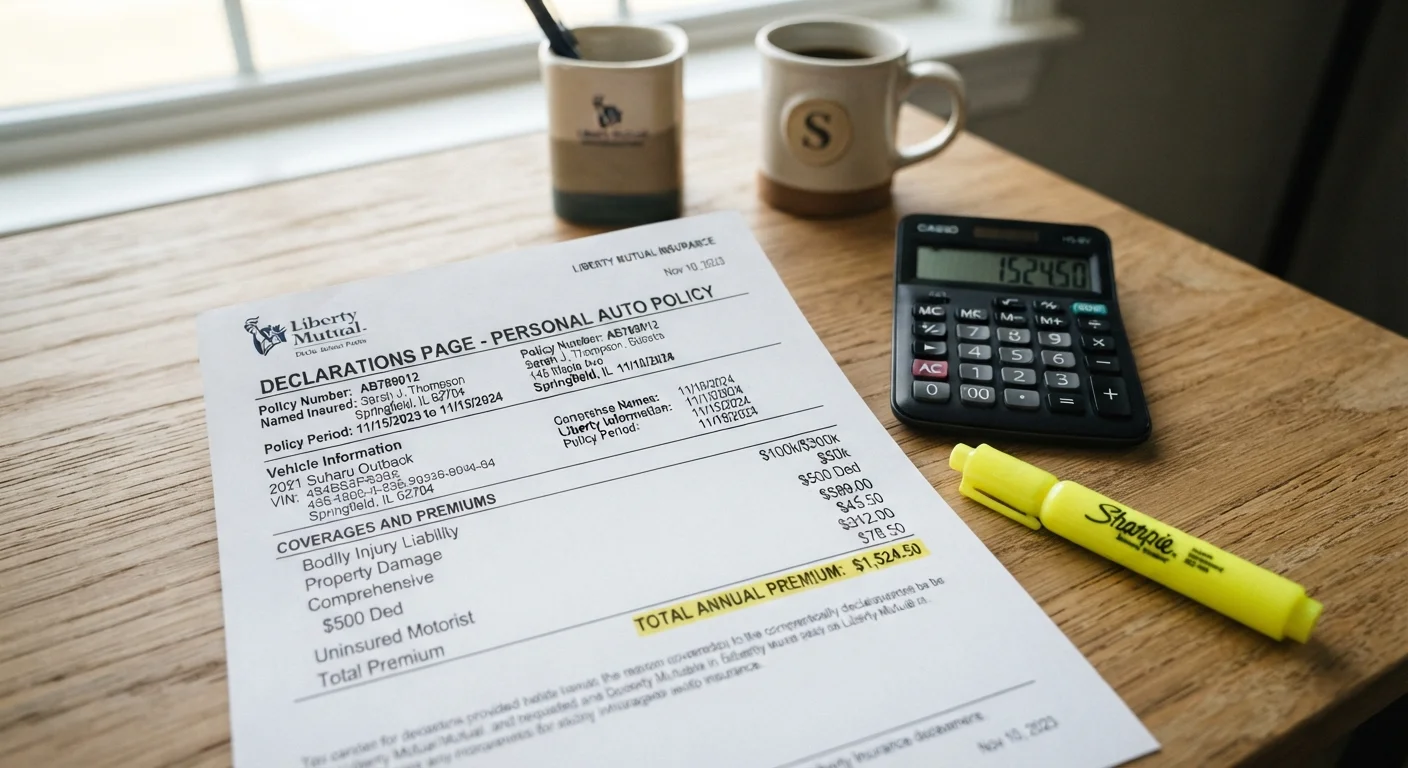
Current declarations page
Shows your existing coverage types, limits, deductibles, and premium breakdown at a glance.
Prior-year declarations page
Lets you compare what changed in coverage or price from one term to the next.
Full policy document
Contains the exclusions and conditions that the declarations page summarizes but does not fully explain.
Vehicle registration and title
Confirms the vehicle information on the policy matches the actual registered owner and VIN.
Recent pay stub or proof of income (if applicable)
Some discounts or usage-based programs require income or employment verification at renewal.
Gather your documents
Verify vehicle and driver information
Review coverage types and limits
Check for rate changes and their causes
Check for coverage gaps and overlaps
Final steps before signing
Do not rely on the renewal notice alone
The one-page renewal notice summarizes your premium and may flag major changes, but it does not reproduce your full coverage terms or exclusions. Always read the declarations page and the full policy document together. Changes to exclusions or conditions can appear in the policy language without appearing prominently in the notice.
After you finish the review
If the review turns up a coverage gap or an unexplained rate increase, contact your insurer before the renewal date rather than after. Insurers generally cannot backdate changes to a policy that has already renewed. If a vehicle listed on the policy was recently purchased used, the buying process may also affect your coverage needs; the used car buying checklist covers the documentation steps that feed directly into setting up or adjusting a policy.
This article provides general information about auto insurance and is not personalized insurance, financial, or legal advice. Coverage terms, exclusions, and eligibility vary by insurer and by state. Read your actual policy documents and speak with a licensed insurance agent before making decisions about your coverage.