Auto loan pre-approval is a lender's conditional commitment to finance up to a certain amount at a stated annual percentage rate (APR). You receive this estimate before choosing a vehicle, which means you walk into a dealership knowing your spending ceiling and your approximate monthly payment.
Without pre-approval, the financing conversation happens after you have already fallen for a specific car. That order shift reduces your negotiating leverage and can pressure you into accepting terms you have not had time to evaluate. A full overview of the auto financing process explains each stage in more detail.
Pre-approval also lets you compare offers from multiple lenders before any single lender has finalized the deal. If you plan to finance a used vehicle, pairing your pre-approval search with a pre-purchase mechanic inspection protects you on both the financial and mechanical sides of the transaction.
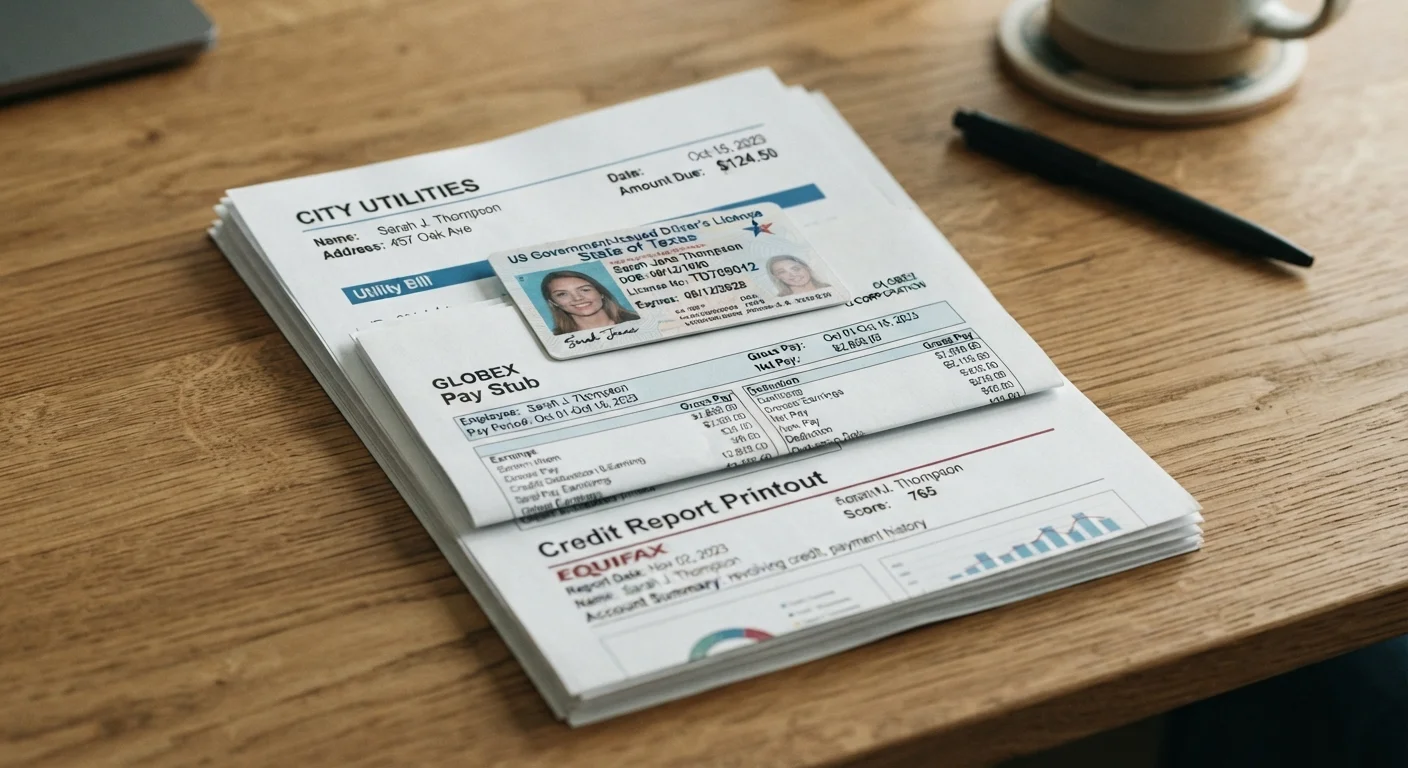
Lenders typically ask for identity, income, and residence documents during pre-approval.
Documents and information to collect
Lenders vary in their exact requirements, but the categories below cover what most U.S. lenders ask for at the pre-approval stage. Collecting everything before you start an application prevents back-and-forth delays and limits the number of hard credit inquiries on your report.
Identity verification
Locate a valid government-issued photo ID such as a driver's license, state ID, or passport. Lenders need this to confirm your legal identity and match it to your application.Must
Write down your Social Security number or have your Social Security card accessible. Lenders use this to pull your credit report and verify your tax records.Must
Confirm your current legal name matches the name on all documents you plan to submit. Discrepancies can slow processing or trigger additional verification steps.Should
Proof of residence
Gather a recent utility bill, bank statement, or lease agreement showing your current home address. Most lenders require the document to be dated within the past 60 to 90 days.Must
If you have moved recently, collect documentation for your previous address as well. Some lenders ask for a two-year residence history.Should
Income and employment
Pull your two most recent pay stubs if you are a salaried or hourly employee. These confirm your gross monthly income, which lenders use to calculate your debt-to-income ratio.Must
Collect your two most recent federal tax returns if you are self-employed or have variable income. Tax returns give lenders a fuller picture when pay stubs alone are inconsistent.Must
Write down your employer's name, address, and phone number. Lenders often verify employment directly before finalizing approval.Must
If you receive additional income from alimony, Social Security, or rental property, gather the relevant award letters or lease agreements. You are not required to disclose these sources, but including them can strengthen your application.Should
Credit and debt overview
Check your credit report from all three major bureaus (Equifax, Experian, and TransUnion) at AnnualCreditReport.com before applying. Dispute any errors in advance so they do not suppress your score during lender review.Must
Note your approximate credit score from a free monitoring service or your bank. This helps you set realistic expectations about the APR range you are likely to receive.Should
List your current monthly debt obligations including student loans, credit card minimums, and any existing car payments. Lenders calculate your debt-to-income ratio using these figures alongside your income.Must
Down payment and trade-in details
Confirm how much cash you plan to put down and verify that the funds are available in a bank account. A larger down payment reduces the loan principal and can lower the APR a lender offers.Must
If you have a vehicle to trade in, locate the title and note the make, model, year, mileage, and approximate condition. Lenders and dealers will assess its value independently, but having this information ready speeds the process.Should
Gather any payoff statements if your trade-in still carries a loan balance. The remaining balance affects how much equity you can apply toward the new loan.Should
Vehicle information (if already identified)
Record the Vehicle Identification Number (VIN), purchase price, mileage, and model year of the vehicle you are considering. Some lenders tie pre-approval terms to the specific vehicle once you have selected one.Nice to have
Check whether the vehicle is new or used, as many lenders apply different rate tiers and maximum loan terms to each category.Should
Once you receive an offer, review the full loan agreement carefully. Understanding the numbers in a loan offer walks through APR, origination fees, and prepayment penalties in plain language.
This article provides general financial information for educational purposes only. It is not personalized financial, legal, or tax advice. Loan terms, eligibility requirements, and lender practices vary. Consult a licensed financial adviser or loan officer for guidance specific to your situation.
Auto Loans Editorial Team is the collective byline for our editorial team and contributor network. Articles published under this byline or an editorial pen name are researched, written, and reviewed according to our editorial standards for clarity, consistency, and independence before publication.
Disclaimer: The content provided on our blog site traverses numerous categories, offering readers valuable and practical information. Readers can use the editorial team’s research and data to gain more insights into their topics of interest. However, they are requested not to treat the articles as conclusive. The website team cannot be held responsible for differences in data or inaccuracies found across other platforms. Please also note that the site might also miss out on various schemes and offers available that the readers may find more beneficial than the ones we cover.