

Key Takeaways
- Honda's reliability reputation is backed by owner data and industry surveys, but varies by model and model year.
- High resale value reflects market demand, not a guarantee of trouble-free ownership.
- Regular maintenance matters more than brand alone for a vehicle reaching high mileage.
- Reliability ratings measure reported problems per 100 vehicles, not overall longevity or cost of ownership.
- Some Honda models have faced well-documented recalls and defect campaigns that complicate the brand's overall image.
Where Honda's longevity reputation comes from
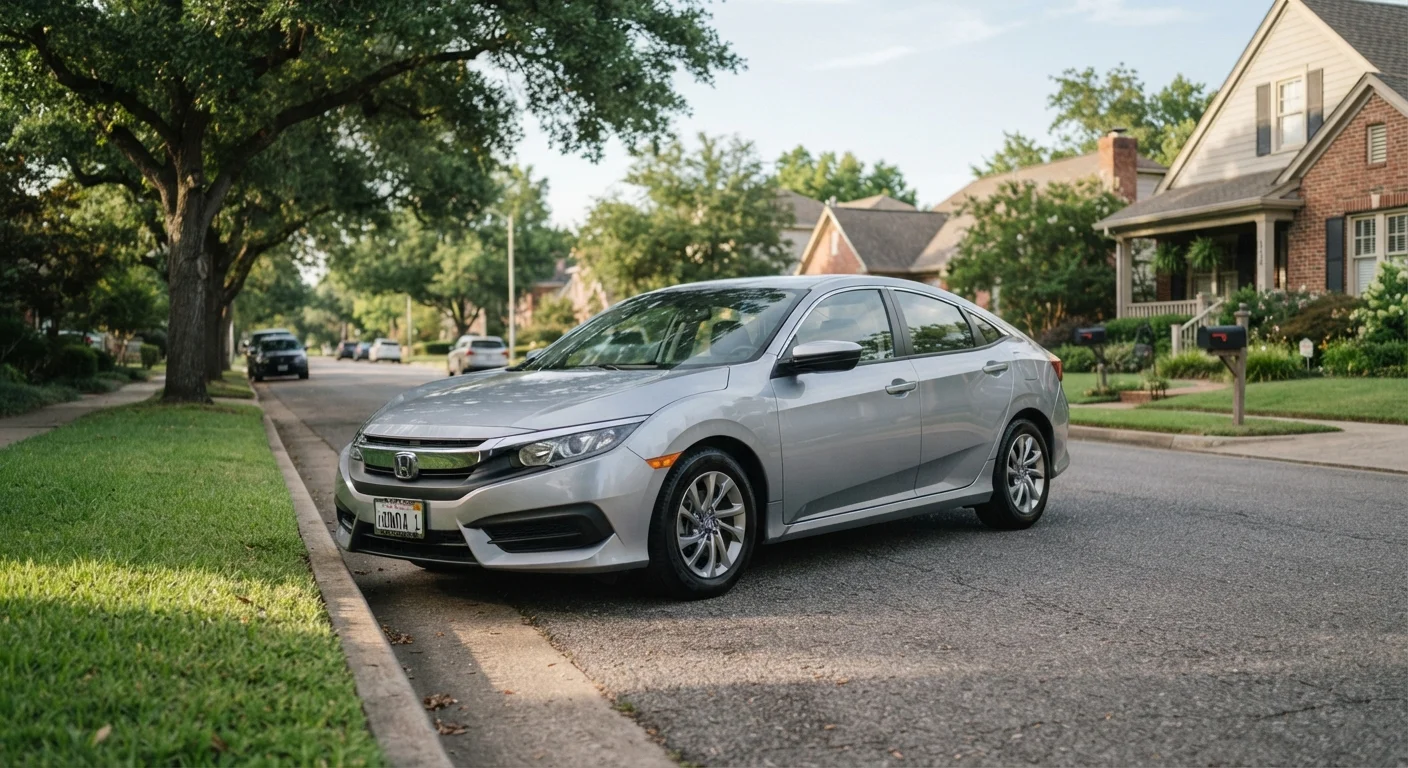
Honda built much of its U.S. reliability reputation through the Civic and Accord during the 1980s and 1990s, when both models earned consistent praise from automotive journalists and owner surveys for low defect rates and predictable maintenance needs. That era established a strong association in the minds of American car buyers between the Honda name and mechanical dependability.
Consumer Reports, which has tracked owner-reported repair data for decades, has placed Honda near or above the industry average for brand reliability in most years since the early 2000s. J.D. Power's studies have shown similar patterns, though Honda's ranking has moved up and down depending on the model year and the specific vehicles included in a given survey cycle. The reputation has a real foundation. It is not purely marketing.
That said, reliability data measures reported problems within a defined period, typically three years of ownership. It does not directly capture 15-year durability or what a vehicle costs to maintain at 150,000 miles. For a fuller picture of how to read these scores, see what a car brand's reliability rating actually tells you.
Myths and facts about Honda's reliability record
Myth
All Honda models are equally reliable, so any used Honda is a safe buy.
Fact
Reliability varies significantly across Honda's model lineup and across production years within the same model.
Honda produces a wide range of vehicles, from compact cars to SUVs and minivans, and each nameplate has its own reliability record. J.D. Power Vehicle Dependability Studies, which measure reported problems per 100 vehicles after three years of ownership, have shown Honda models landing at different points on the spectrum from year to year. The Civic and Accord have historically earned strong scores, while certain CR-V and Odyssey model years have drawn more owner complaints. Treating the brand as a monolithic guarantee of quality overlooks real variation in engineering decisions, parts sourcing, and production changes across model generations. Before purchasing any used Honda, checking model-specific reliability data is more informative than relying on the brand name alone. See common myths about used car reliability for a broader look at how mileage and brand interact in used vehicle decisions.
Myth
Honda's high resale value proves the cars last longer than competitors.
Fact
Resale value reflects buyer demand and perception, which correlates with but does not directly measure mechanical longevity.
Honda vehicles have consistently held strong resale values according to data from automotive valuation firms like Kelley Blue Book and Edmunds. That performance is real, but resale value is driven by consumer confidence and market demand, not by an objective measurement of how long a vehicle will remain mechanically sound. A brand with a strong reputation can command higher used prices even when the gap in actual defect rates between it and competitors is narrow. Resale value is one useful data point when evaluating a vehicle, but it should not be treated as a proxy for longevity. What a reliability rating actually tells you explains in more detail how these metrics are constructed and what they leave out.
Myth
Hondas can reach 200,000 miles with minimal maintenance because they are built to last.
Fact
High-mileage Hondas that remain reliable have almost always been maintained consistently and correctly throughout their lives.
Stories of Honda Civics and Accords surpassing 200,000 miles circulate widely in automotive communities, and some of those vehicles are genuine examples of durability. What those stories rarely include is the maintenance record behind them. Vehicles that reach high mileage with few problems have typically received regular oil changes, timely timing belt or chain service, coolant flushes, and transmission maintenance. Honda's engineering does support longevity when a vehicle is properly maintained, but the same is true of several other mainstream brands. The brand does not make maintenance optional. Skipping scheduled service on a Honda produces the same category of failures it does on any vehicle.
[in_content_images:0]Myth
Honda has never had serious quality problems, so its reputation is untarnished.
Fact
Honda has faced significant recall campaigns, including the widespread Takata airbag inflator defect that affected millions of its vehicles.
The Takata airbag inflator recall, which grew into one of the largest automotive safety recalls in U.S. history, affected a substantial number of Honda and Acura vehicles. Honda was among the automakers with the highest number of affected vehicles because Takata supplied inflators across much of its lineup for years. Separately, certain Honda models have faced recalls related to transmission issues, fuel pump defects, and electrical problems. These campaigns do not erase Honda's overall reliability data, but they are part of an accurate picture of the brand. Consumers can search the National Highway Traffic Safety Administration (NHTSA) database to review recall history for any specific vehicle identification number (VIN) before purchase.
Myth
Honda and Toyota are interchangeable when it comes to reliability, so it does not matter which you choose.
Fact
Both brands have strong reliability track records, but they differ in model lineup, engineering approach, and which specific vehicles perform best in long-term owner surveys.
Honda and Toyota are frequently grouped together as the two most reliability-associated Japanese mainstream brands in the U.S. market, and the comparison has some grounding in data. Both have appeared near the top of Consumer Reports brand reliability rankings in multiple recent years. However, treating them as identical flattens real differences. Toyota's hybrid lineup has a longer production history in the U.S. and more accumulated owner data on long-term powertrain behavior. Honda's VTEC engine technology has a distinct service profile from Toyota's engine family. Model for model, the comparison changes depending on which vehicle you examine. Toyota's model lineup and brand identity provides a factual overview of how that brand's record compares at the model level.
This article provides general automotive information for educational purposes only. It is not a recommendation to purchase any specific vehicle, brand, or model. Reliability data, recall information, and resale values change over time. Consult NHTSA's public database and a qualified mechanic or automotive professional before making any purchase decision.
What this means for used car shoppers
Honda's reliability record makes its used vehicles worth considering, but that record does not eliminate the need for due diligence. A used Honda with no maintenance history carries more uncertainty than a competing brand's vehicle with complete service records. NHTSA's VIN lookup tool lets any buyer check open recalls before purchase, and a pre-purchase inspection by an independent mechanic adds another layer of verification that no brand reputation can replace.
Warranty coverage is another dimension worth examining. Used vehicles sold as certified pre-owned (CPO) carry manufacturer-backed coverage, while private-party sales typically do not. Understanding how warranty coverage works can help buyers interpret what protection actually transfers with a used vehicle purchase.
The broader used cars resource hub covers the full range of factors buyers should weigh when evaluating any pre-owned vehicle, independent of brand.