

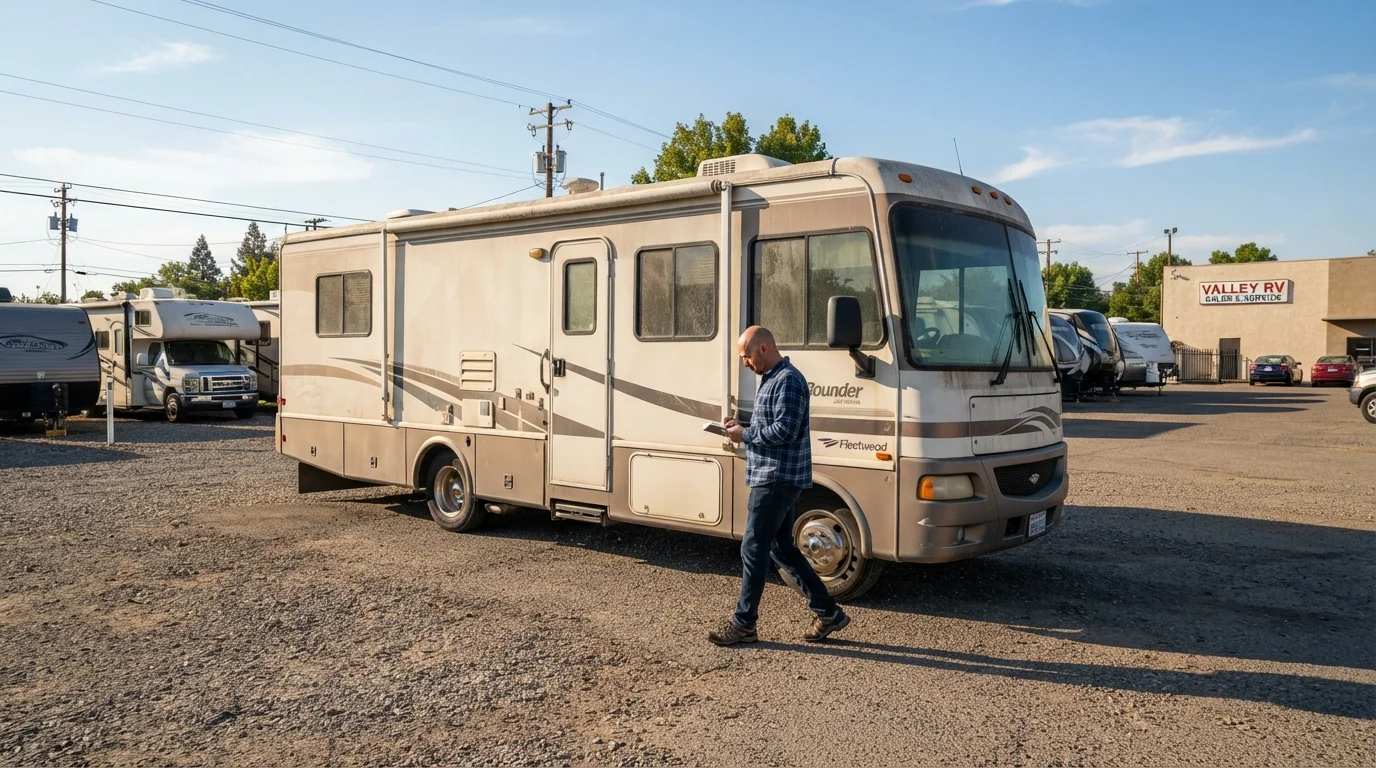
Key Takeaways
- Water damage is the most expensive hidden problem in used RVs and is easy to miss without a careful inspection.
- The living systems in an RV (plumbing, electrical, appliances) need separate checks beyond the drivetrain.
- Title, registration, and loan history on an RV can be more complicated than on a standard vehicle.
- Financing and insurance for RVs differ from standard auto products; costs vary widely by lender and insurer.
- A pre-purchase inspection by an RV-specific technician can catch problems a general mechanic might miss.
Why used RV buying requires a different checklist
A used RV is two purchases in one: a vehicle and a living space. Most buyers have some experience buying a car, but the living-quarters side of an RV involves plumbing, gas lines, roof seals, and electrical systems that a standard vehicle inspection will not cover. Missing problems in any of those areas can turn an affordable purchase into a costly project.
The mistakes below are common among first-time buyers. They are also avoidable with a bit of preparation. If you are still comparing whether an RV fits your lifestyle at all, weighing an RV against a van is a useful starting point before you get to the inspection stage.
The most common oversights and how to avoid them
The mistakes below cover both the physical inspection and the paperwork. Read through all of them before you schedule a showing, because some require preparation before you arrive.
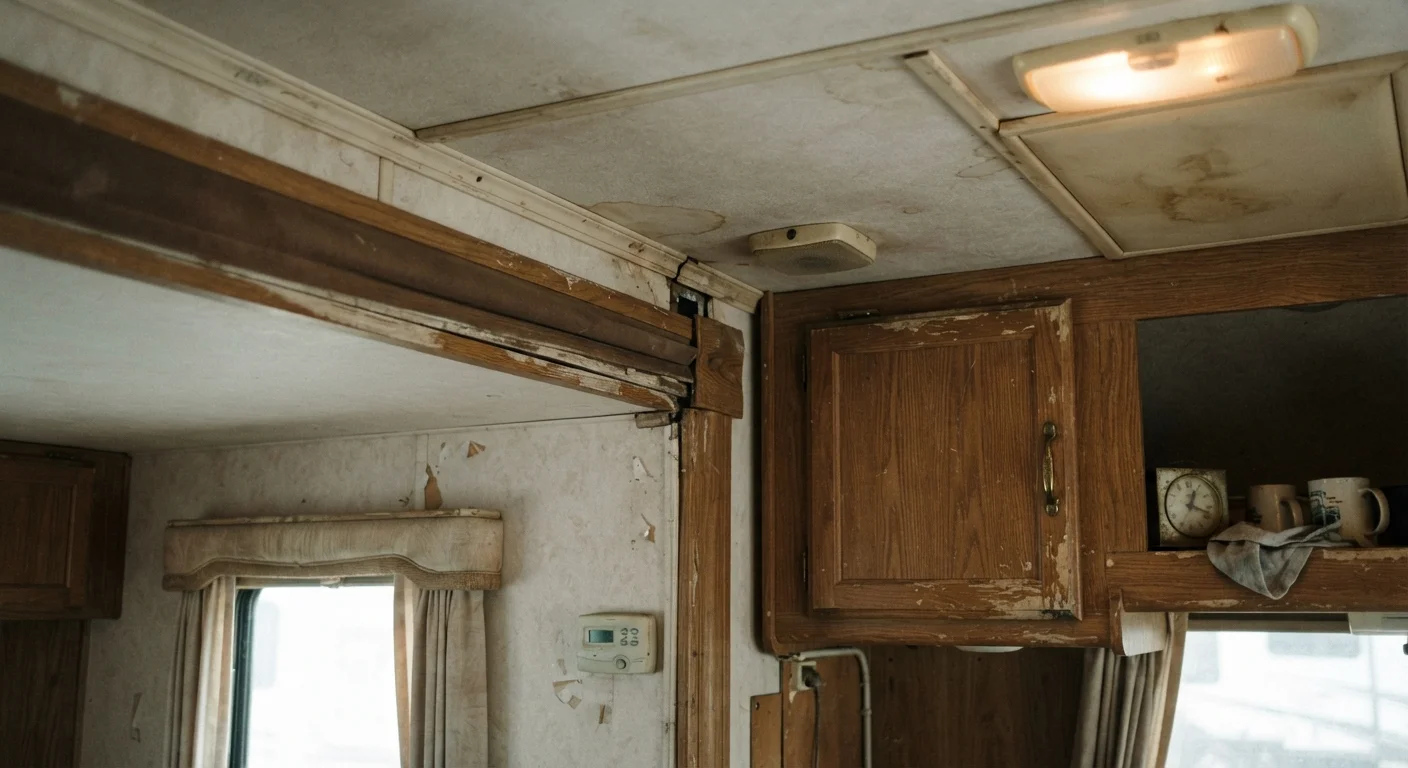
Skipping a water damage check. Many buyers focus on the engine and overlook the roof, seams, and interior walls.
Why it happens: Water damage is often invisible on the surface; sellers may have repainted or recarpeted over it, and buyers coming from standard car purchases are not used to checking for it.
Treating the living systems as a secondary concern. The RV's plumbing, 12-volt and 120-volt electrical systems, propane lines, and appliances all need to work.
Why it happens: First-time buyers often think about the vehicle side of the purchase and assume the living quarters are simpler to evaluate.
Not verifying the title and loan status before paying. RVs can carry liens, and some have complicated ownership histories.
Why it happens: RV titles follow vehicle titling rules in most states, but buyers unfamiliar with large-vehicle purchases may not realize a lien could transfer with the sale.
Underestimating ongoing costs. The sticker price is one number; storage, campsite fees, insurance, fuel, and maintenance add up to a different number.
Why it happens: The excitement of the purchase tends to push long-term expenses out of the picture, especially for first-time buyers with no reference point.
Skipping a professional pre-purchase inspection. A test drive tells you how it handles; it does not tell you whether the frame has rust or the generator is failing.
Why it happens: Buyers sometimes see inspection fees as an extra cost on top of an already large purchase, so they skip it to save money.
Assuming standard auto financing applies. RV loans are a separate product with different terms, rates, and lender requirements.
Why it happens: Because RVs are titled like vehicles in most states, buyers expect the financing process to work the same way.
This article is general information for educational purposes and is not financial, legal, or insurance advice. Costs, loan terms, and regulations vary by state and provider. Consult a licensed professional for guidance specific to your situation.
Before you sign anything
Once you have completed a physical inspection and verified the title, review the purchase agreement line by line. Confirm what, if any, warranty comes with the sale, and get every verbal promise in writing. Private sellers rarely offer warranties, while some dealers include limited coverage; the terms matter more than the label.
For your first trip after purchase, a preparation checklist will help you catch anything you may have missed during the buying process. See the first RV trip preparation checklist once you have closed the deal.
~$300
Typical RV pre-purchase inspection cost
RV inspection fees vary by technician and RV size, but most fall in the $200 to $400 range, according to RV industry service providers.
10-20 years
Common RV loan term length
RV loans often run significantly longer than standard auto loans, which affects the total interest a buyer pays over the life of the loan.