

Key Takeaways
- Verify your RV insurance covers the trip type and any towed vehicle before you leave home.
- Test all systems (water, propane, electrical, slides) at least two days before departure so repairs are still possible.
- Know your RV's height, weight, and length before plotting a route through tunnels or low bridges.
- Pack a basic tool kit and know where your shutoff valves are in case something fails on the road.
- Confirm campsite reservations and check for length or hookup restrictions that match your rig.
Summary
22 items · 45 to 90 minutes
Before you leave the driveway
Most first-trip problems trace back to a skipped step at home, not a mechanical failure in the middle of nowhere. Working through a checklist two to three days before departure gives you time to fix what you find.
Start with your paperwork. Confirm your registration, driver's license, and insurance are current and physically in the vehicle. RV insurance is different from a standard auto policy, and the protections vary widely by provider and plan. Read how RV insurance works to understand what your policy actually covers before you assume you're protected.
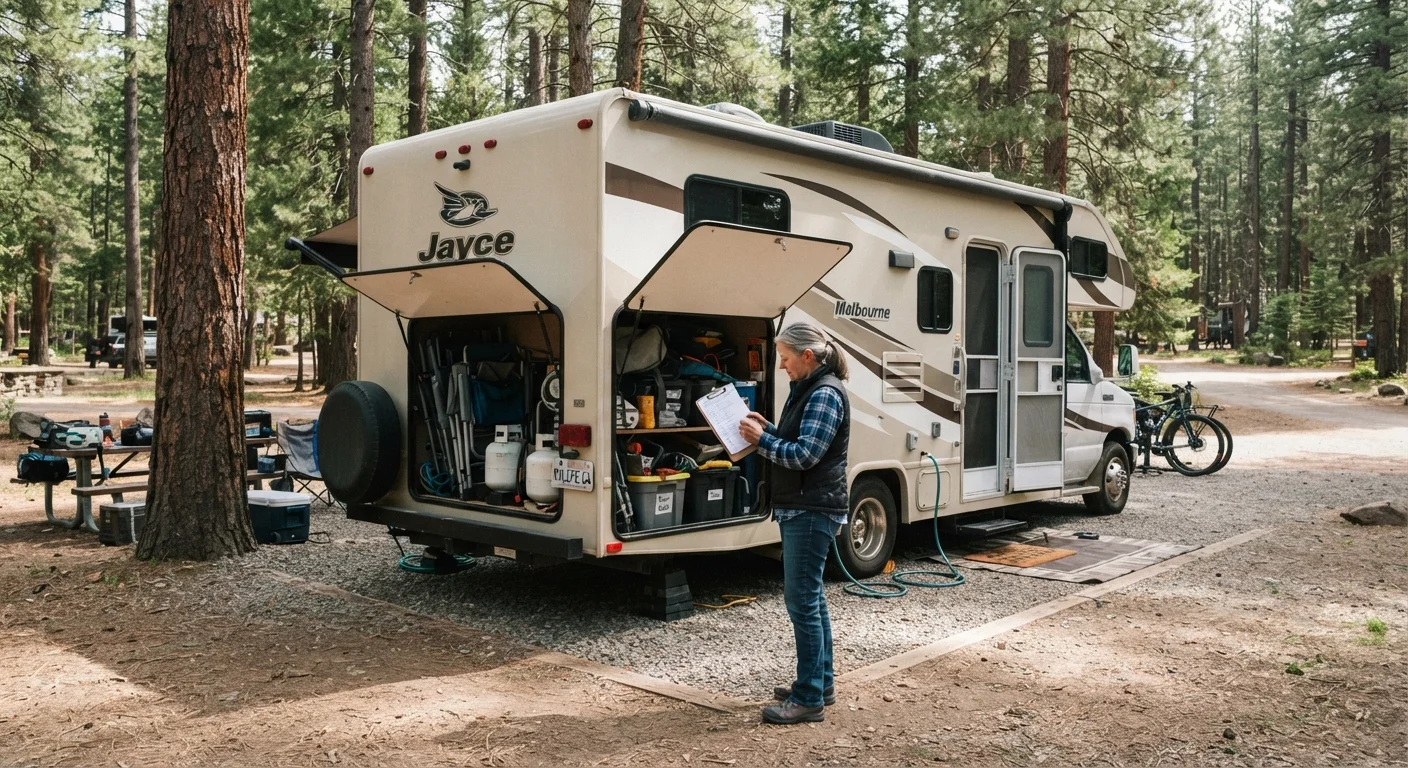
Next, do a full systems check. Run the water pump and check every faucet and toilet. Test the propane system, including the stove, furnace, and water heater. If your RV has a generator, run it under load for at least 30 minutes. Extend and retract all slide-outs while watching for unusual sounds or binding. Test the air conditioning if the season warrants it.
Check all exterior lights: headlights, brake lights, turn signals, and running lights. If you're towing a vehicle or trailer, verify the wiring harness and safety chains. Confirm tire pressure on every wheel, including the spare, using a gauge rated for your RV's load range. Tires on RVs that sit for months can lose pressure or develop sidewall cracks even if the tread looks fine.
Check insurance before, not after, a problem
Standard auto insurance does not cover an RV in the same way it covers a car. Personal belongings inside, emergency living expenses if the RV becomes uninhabitable, and roadside assistance for a large motorhome are often excluded from basic policies. Confirm your coverage details with a licensed insurance agent before departure, and keep proof of insurance accessible in the vehicle at all times.
Route planning and campsite logistics
Your RV's physical dimensions should drive your route before anything else does. Note your rig's height (including any rooftop equipment), total length, and gross vehicle weight rating (GVWR), which is the maximum loaded weight the manufacturer allows. Low bridges, weight-restricted roads, and short pull-through campsites are real obstacles that GPS apps built for passenger cars will not flag automatically.
Several apps and GPS units designed for RVs let you enter your dimensions and filter routes accordingly. Even so, cross-check any tunnel or bridge clearance against your actual height before committing.
Call or check the campground's website to confirm your reservation details, including the maximum length they can accommodate and which hookups (water, electric, sewer) are at your specific site. A 50-amp RV at a 30-amp site can work with an adapter, but power will be limited. Arriving after the office closes with the wrong site assigned is a solvable but avoidable frustration.
Documents and insurance
Systems check
Tires and exterior
Route and campsite
Supplies and utilities
Low bridges and weight limits are serious hazards
A standard car GPS does not know your RV's height or weight. Driving under a bridge shorter than your rig causes severe structural damage and can injure occupants. Before your first trip, enter your exact roof height (including AC units or antennas) into an RV-specific routing tool and cross-check any route with known low clearances.
What to pack beyond the basics
A new RV typically comes stocked with nothing. Beyond food and clothing, you need supplies that cover routine function and minor emergencies.
For connections and utilities, pack a 25-foot and a 50-foot fresh water hose, a water pressure regulator (campground pressure can exceed what RV plumbing tolerates), a sewer hose with fittings, and electrical adapters for both 30-amp and 50-amp connections. Leveling blocks let you stabilize the RV on uneven ground without relying solely on built-in leveling jacks.
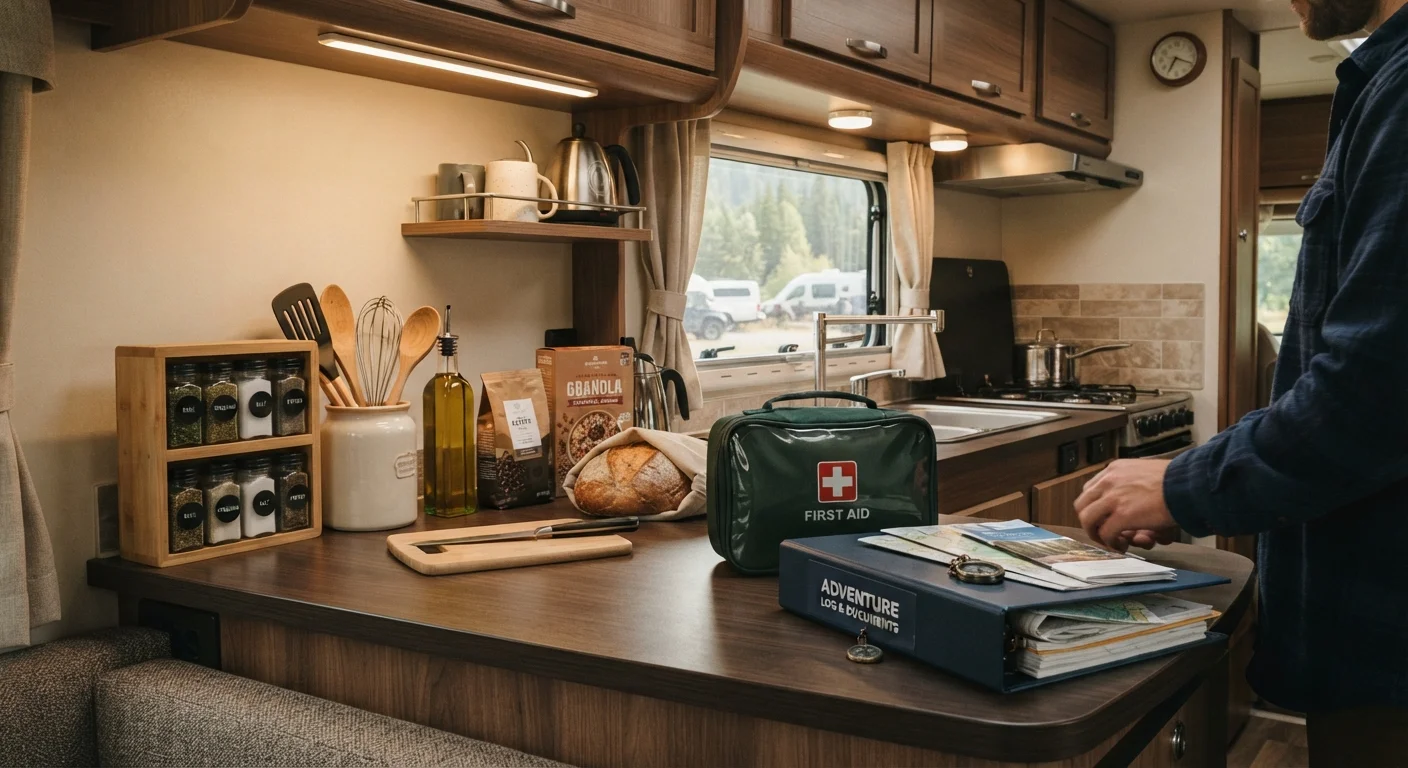
For basic repairs and safety, carry duct tape, a multi-tool, a headlamp, extra fuses that match your RV's fuse panel, and a basic first aid kit. Know where your water shutoff and propane shutoff are located before you need them in a hurry.
The costs of equipping an RV for the first time can add up quickly. A breakdown of ongoing RV ownership costs can help you budget for gear alongside fuel, campsite fees, and maintenance.
This article is general information for educational purposes. For guidance specific to your vehicle, insurance policy, or financial situation, consult a qualified mechanic, licensed insurance agent, or financial adviser as appropriate.