

Key Takeaways
- Negative equity means you owe more on your loan than the vehicle is currently worth.
- Depreciation is fastest in the first two years, often outpacing early loan payoff.
- Long loan terms and small down payments increase the risk of going upside down.
- Rolling unpaid balances from a previous loan into a new one compounds the problem.
- Reviewing your loan-to-value ratio periodically can help you spot negative equity early.
What 'upside down' means in a car loan
Negative equity, often called being 'upside down,' happens when the outstanding balance on your auto loan is higher than the current market value of the vehicle. For example, if you owe $18,000 on a car that would sell for $14,000 today, you have $4,000 in negative equity.
This gap can form slowly or quickly depending on how the loan is structured and how fast the vehicle loses value. It is not a rare situation. Many borrowers find themselves in this position without understanding how they got there. The basics of auto financing cover how loans are structured, but the equity side of the equation gets less attention at the point of sale.
Depreciation and loan amortization work in opposite directions. A vehicle's value drops fastest early in ownership, while a standard loan front-loads interest, meaning principal payoff is slowest at the beginning. That combination creates a window where equity is most at risk.
Common mistakes that create or worsen negative equity
Several borrowing decisions consistently lead to negative equity. Each one individually raises risk; in combination, they can put a borrower significantly underwater for most of the loan term.
Choosing a very long loan term to lower monthly payments.
Why it happens: Lenders often present 72- or 84-month terms as an affordable option because the monthly figure looks manageable. Borrowers focus on that number rather than the total cost or how slowly the principal shrinks.
Making little or no down payment at signing.
Why it happens: Dealers sometimes advertise zero-down financing as a convenience, and borrowers who are short on cash accept it without considering how it affects their equity position from day one.
Rolling a previous loan's remaining balance into a new vehicle loan.
Why it happens: When trading in a vehicle while still owing money on it, dealerships may add the leftover balance to the new loan. Borrowers sometimes accept this without realizing they start the new loan already underwater.
Financing a vehicle that depreciates faster than average without accounting for it.
Why it happens: Some vehicle types lose value more quickly than others. Borrowers who do not research typical depreciation rates for a specific model may not realize how fast their equity shrinks in the first few years.
Adding financed extras that increase the loan balance without adding resale value.
Why it happens: Extended warranties, gap insurance, paint protection, and accessories are often added at the dealership and rolled into the loan. Each addition raises the amount owed without a proportional increase in the vehicle's market value.
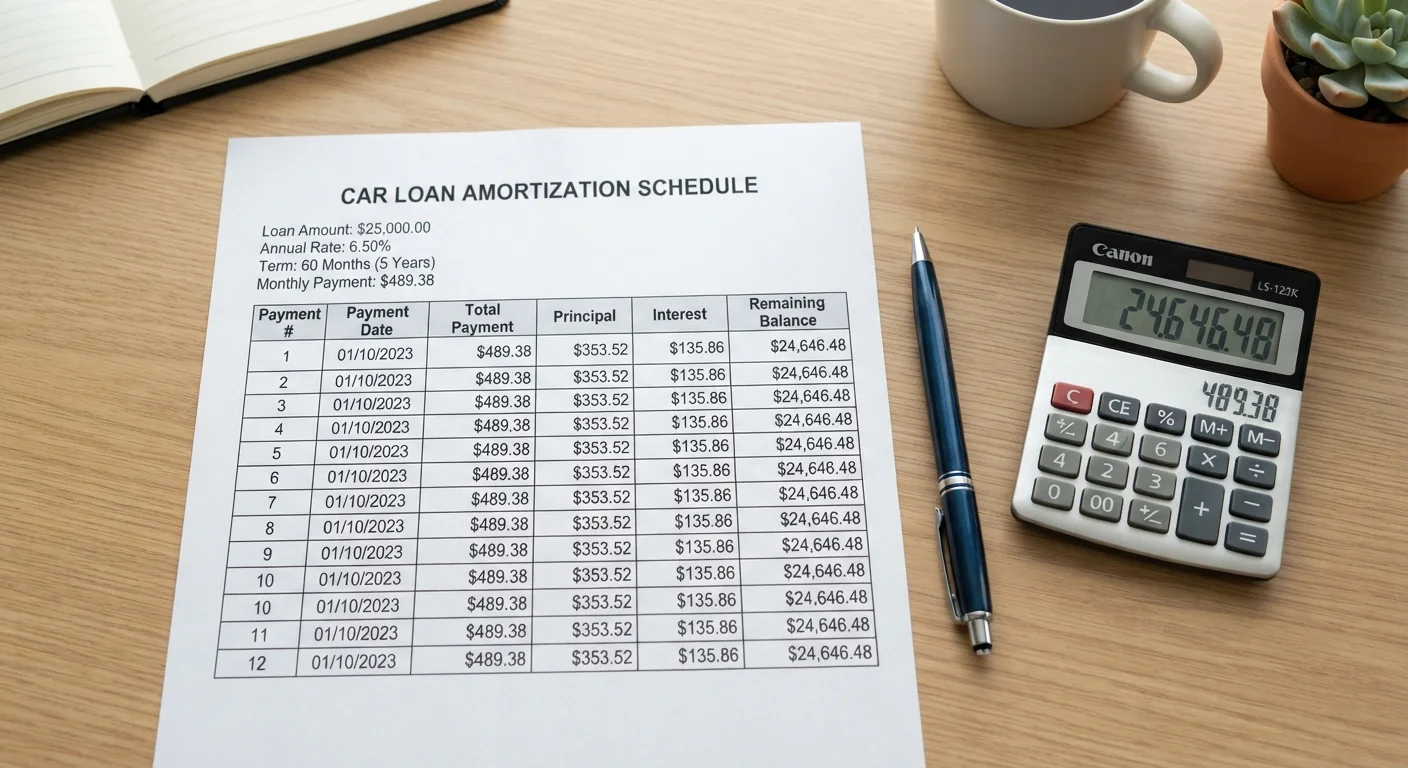
Understanding how amortization works helps clarify why some of these mistakes matter so much. In the early months of a loan, most of each payment covers interest. Principal payoff accelerates only later in the term. That is why a borrower who makes a small down payment, chooses a long term, and buys a fast-depreciating vehicle may owe more than the car is worth for several years. See common auto loan myths for a fuller look at how payment-focused thinking can obscure the real cost of a loan.
What to do if you are already upside down
Negative equity affects your options
Being upside down on a loan limits what you can do if your circumstances change. Selling the vehicle privately, trading it in, or refinancing all become harder when you owe more than the car is worth. If you total the vehicle and carry only standard insurance without gap coverage, you may still owe money after the insurer pays out. Understanding where you stand before a problem arises gives you more choices.
If you currently owe more than your vehicle is worth, a few approaches can reduce the gap over time. Making extra principal payments, even small ones, shortens the period of negative equity because more of each dollar goes directly toward reducing what you owe. Check first whether your loan carries a prepayment penalty. The article on paying off a car loan early covers what to verify before sending extra payments.
Refinancing is another option some borrowers consider, though it works best when your credit has improved since the original loan or rates have dropped. Refinancing while deeply underwater can extend risk rather than reduce it if it stretches the term further. When refinancing makes sense depends on the numbers, not the monthly payment alone.
For general guidance on buying and financing used vehicles, understanding how depreciation curves vary by vehicle type is a useful starting point before you commit to any loan structure.
This article provides general financial information for educational purposes only and is not personalized financial or lending advice. Loan terms, rates, and vehicle values vary. Consult a qualified financial professional for guidance specific to your situation.