

| Founded | 1903 (Ford Motor Company public records) |
| Headquarters | Dearborn, Michigan |
| Current lineup segments | Trucks, SUVs, crossovers, and electric vehicles (Ford Motor Company, 2024) |
| Brand tier | Mass-market (non-luxury) (See car brand tiers article) |
| Best-known model | F-Series pickup truck (Best-selling vehicle in the U.S. for over four decades) |
| Electric vehicle line | Ford Model e (Mustang Mach-E, F-150 Lightning) (Ford Motor Company, 2024) |
Ford's origins and the production model that changed manufacturing
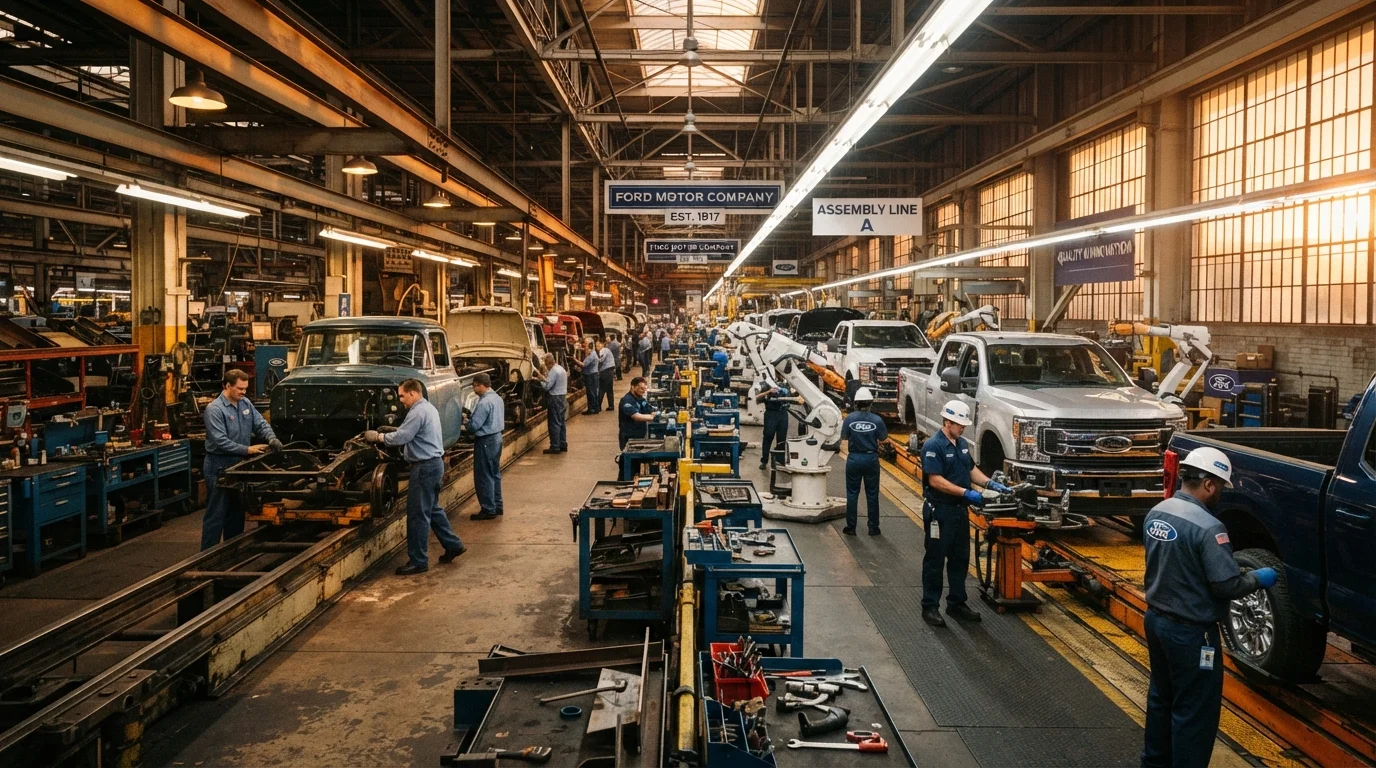
Ford Motor Company was founded in 1903 by Henry Ford and a small group of investors in Detroit, Michigan. The company's first commercial vehicle was the Model A, but it was the Model T, introduced in 1908, that reshaped what car ownership meant in America. By standardizing parts and introducing the moving assembly line at its Highland Park plant in 1913, Ford cut production time and cost dramatically, putting cars within reach of wage-earning households that could not previously afford one.
The assembly line approach was not invented by Ford, but the company's application of it at industrial scale was more systematic than anything that preceded it. By the early 1920s, Ford held the majority of the American car market. That dominance faded as General Motors introduced annual model changes and consumer financing, two strategies Ford had initially resisted. Ford reorganized, launched the Model A replacement in 1927, and continued building a broad product range through the mid-twentieth century.
For broader context on where Ford fits relative to import automakers, see Domestic vs. Import Brands.
| Founded | 1903 (Ford Motor Company public records) |
| Headquarters | Dearborn, Michigan |
| Current lineup segments | Trucks, SUVs, crossovers, and electric vehicles (Ford Motor Company, 2024) |
| Brand tier | Mass-market (non-luxury) (See car brand tiers article) |
| Best-known model | F-Series pickup truck (Best-selling vehicle in the U.S. for over four decades) |
| Electric vehicle line | Ford Model e (Mustang Mach-E, F-150 Lightning) (Ford Motor Company, 2024) |
How Ford's model lineup is structured today
Ford currently sells vehicles in the United States across four broad categories: trucks and commercial vehicles, body-on-frame SUVs, crossover SUVs, and battery-electric models. The company split its operations into two internal divisions around 2022: Ford Blue, which handles combustion-engine vehicles, and Model e, which covers electric vehicles.
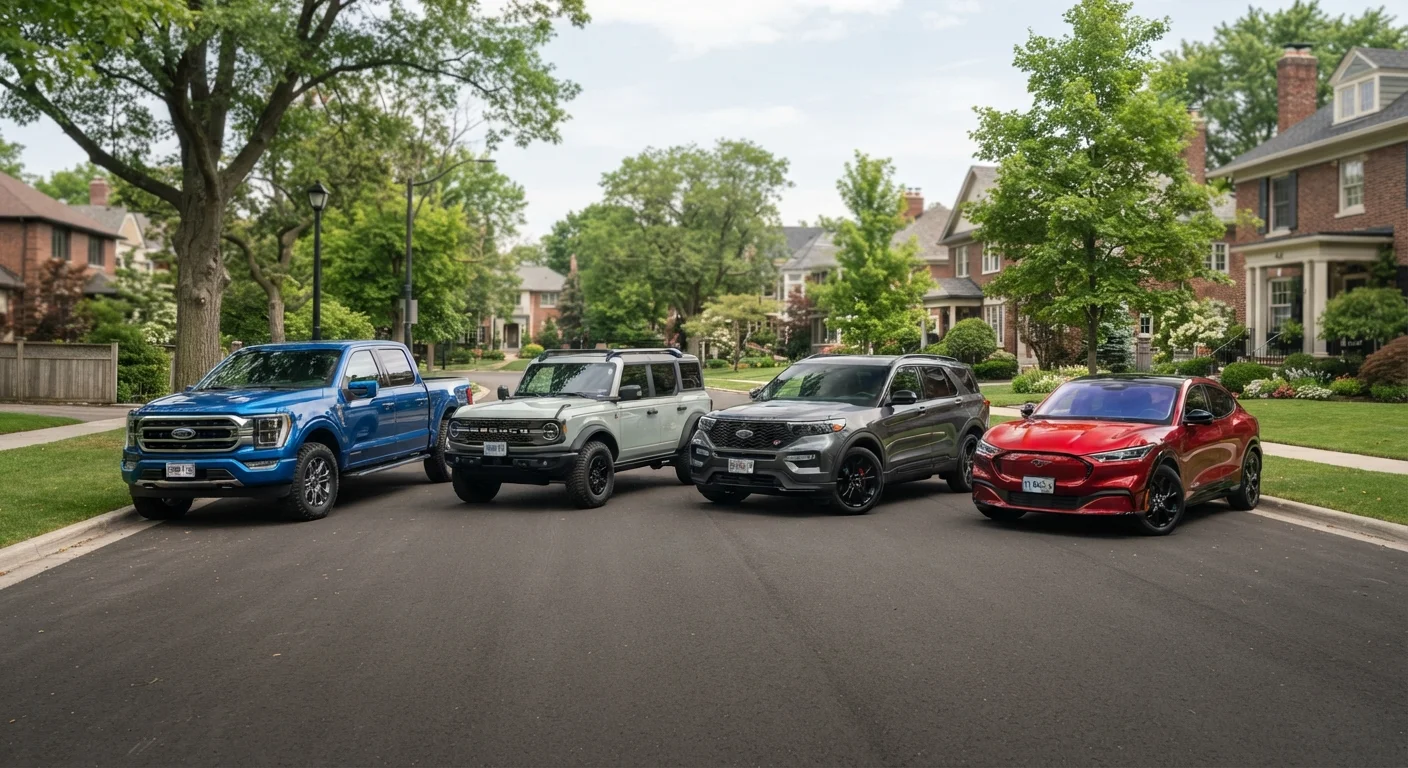
The F-Series pickup truck is the brand's anchor product and the best-selling vehicle line in the United States for more than four decades. The Ranger fills a mid-size truck slot below the F-150. On the SUV side, the Explorer and Expedition are traditional body-on-frame designs, while the Escape and Edge (where still sold) are car-based crossovers built for everyday driving rather than heavy towing. The Bronco and Bronco Sport share a name but use different platforms, with the full Bronco targeting off-road use and the Sport functioning more like a standard crossover.
Electric vehicles in the current lineup include the Mustang Mach-E, a battery-electric crossover, and the F-150 Lightning, an electric version of the full-size pickup. The Mustang nameplate also continues on a gasoline-powered sports coupe, separate from the Mach-E.
For a comparison with another major mass-market lineup, Toyota's model range overview covers similar ground from a different brand perspective.
Ford vs. Lincoln: two separate brands
Ford Motor Company owns both the Ford brand and the Lincoln brand. Lincoln is the company's luxury nameplate and operates as a separate product line with distinct pricing and positioning. When researching Ford vehicles, the two should not be treated interchangeably. For more on how automakers structure brand tiers, see Car Brand Tiers Explained.
Reliability patterns and what owner data shows
Ford's reliability record is mixed across segments, which is worth understanding before shopping. The F-150 has generally received average to above-average reliability scores in owner surveys, though specific model years and engine configurations vary. Owners of the EcoBoost turbocharged engines have reported a range of experiences, from trouble-free to recurring issues depending on the year and maintenance history.
The Explorer had a period of lower reliability scores in the early 2020s that was documented in owner surveys and industry reliability studies. Subsequent updates improved some areas, but buyers researching used Explorers from that window should look up year-specific data rather than treating the nameplate as uniform.
Ford's electric vehicles are newer to market and have less long-term owner data behind them. Early F-150 Lightning owners reported some software and charging-related issues, which Ford addressed through over-the-air updates and service bulletins. Anyone considering a used Lightning should check whether outstanding recalls have been resolved.
For used Ford buyers specifically, pre-owned vehicle buying guidance covers what to verify before committing to any used vehicle purchase. Warranty terms also vary by model year, so reviewing the specific coverage on any Ford you are considering is worth the time. Reading between the lines of a brand's warranty explains how to interpret powertrain and bumper-to-bumper terms.
40+ years
F-Series as top-selling U.S. vehicle
The F-Series pickup has ranked as the best-selling vehicle in the United States for more than four consecutive decades, according to industry sales data.
1908
Year the Model T launched
The Model T, introduced in 1908, made car ownership accessible to working-class Americans by standardizing production and lowering costs.
This article is for general informational purposes only and does not constitute financial, legal, or purchasing advice. Vehicle reliability, pricing, and specifications change over time; verify current details with an authorized dealer or independent vehicle history report before making any purchase decision.