

| Founded | 1937 (Toyota Motor Corporation incorporation) |
| Headquarters | Toyota City, Aichi Prefecture, Japan |
| U.S. market entry | 1958 (Toyopet Crown export) |
| Luxury division | Lexus (launched 1989) (North American market) |
| Top-selling U.S. model | RAV4 (Based on recent annual U.S. sales data) |
| Hybrid technology debut | Prius, 1997 (Japan) |
| North American assembly plants | Kentucky, Indiana, Texas, Alabama |
| Sienna powertrain | Hybrid only since 2021 |
A brief history of the brand
Toyota Motor Corporation was founded in 1937 in Japan by Kiichiro Toyoda, following earlier work in the textile machinery business. The company began exporting vehicles to the United States in 1958 with the Toyopet Crown, though that first model struggled in the American market. Toyota retooled its approach and returned with the Corona in 1965, gaining a foothold that grew steadily through the 1970s and 1980s.
By the 1990s, Toyota had become one of the largest automakers globally. The brand launched Lexus in 1989 as a separate luxury division for the North American market. It introduced the Prius in Japan in 1997, bringing mass-market hybrid technology to consumers before most other manufacturers.
Toyota is currently headquartered in Toyota City, Aichi Prefecture, Japan, and operates assembly plants across North America, including facilities in Kentucky, Indiana, Texas, and Alabama.
How Toyota organizes its model range
Toyota's U.S. lineup covers several vehicle categories. For readers comparing options, understanding how automakers structure their offerings can help narrow a search. How automakers build model lineups explains the broader strategy behind these decisions.
Sedans and cars
The Camry has been one of the best-selling passenger cars in the United States for decades. The Corolla occupies the compact segment below it. The Prius remains the brand's flagship hybrid car, now in its fifth generation.
SUVs and crossovers
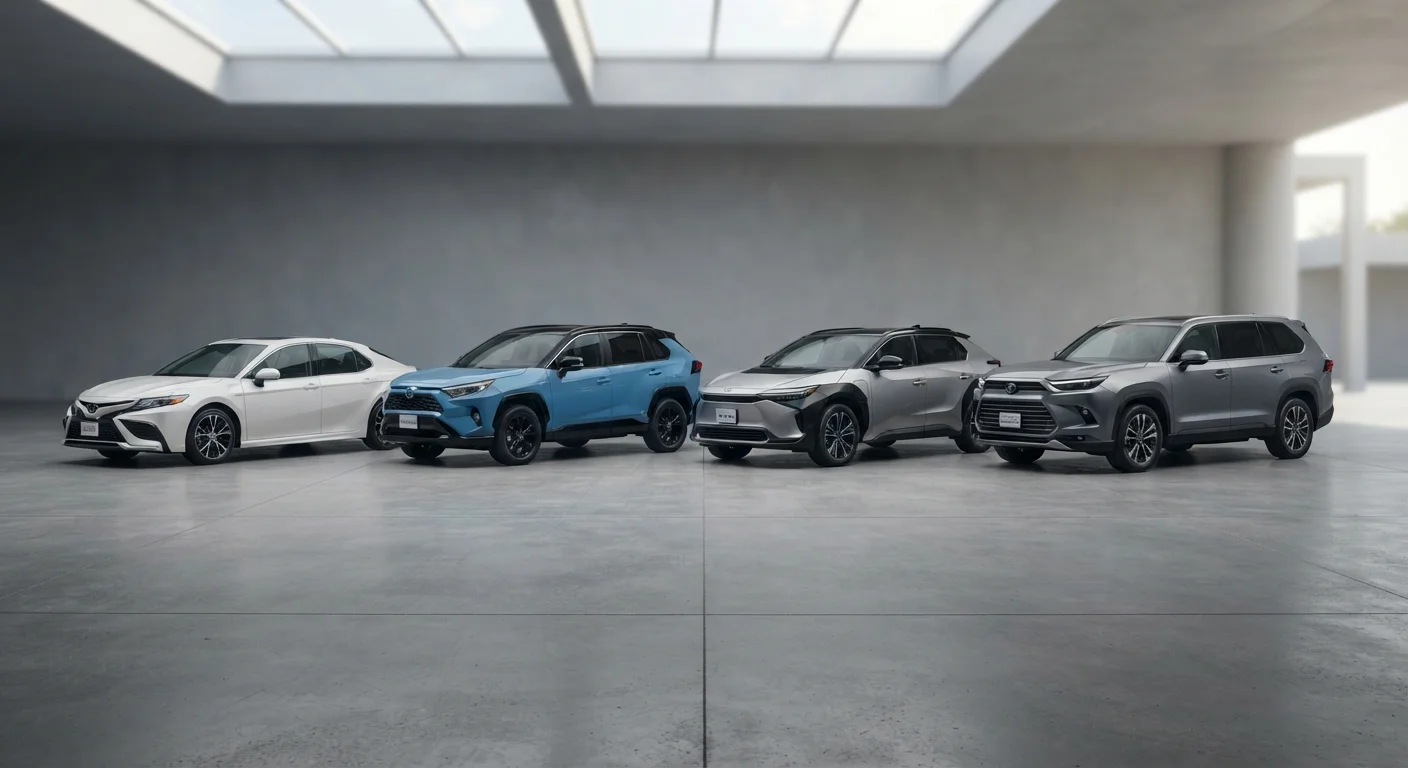
Toyota fields a wide SUV lineup: the subcompact C-HR and Corolla Cross, the compact RAV4 (the brand's top-selling vehicle in the U.S.), the midsize Highlander and Venza, the three-row Grand Highlander, and the body-on-frame 4Runner and Land Cruiser for off-road use.
Trucks and vans
The Tacoma competes in the midsize truck segment. The Tundra is Toyota's full-size pickup. The Sienna minivan, sold exclusively as a hybrid since 2021, rounds out the passenger van category.
Hybrid and plug-in options
Toyota has expanded hybrid availability across most of its lineup, including the RAV4 Hybrid, Highlander Hybrid, and Camry Hybrid. The RAV4 Prime is a plug-in hybrid electric vehicle (PHEV), meaning it can charge from an external outlet for a limited electric-only range before switching to the standard hybrid system.
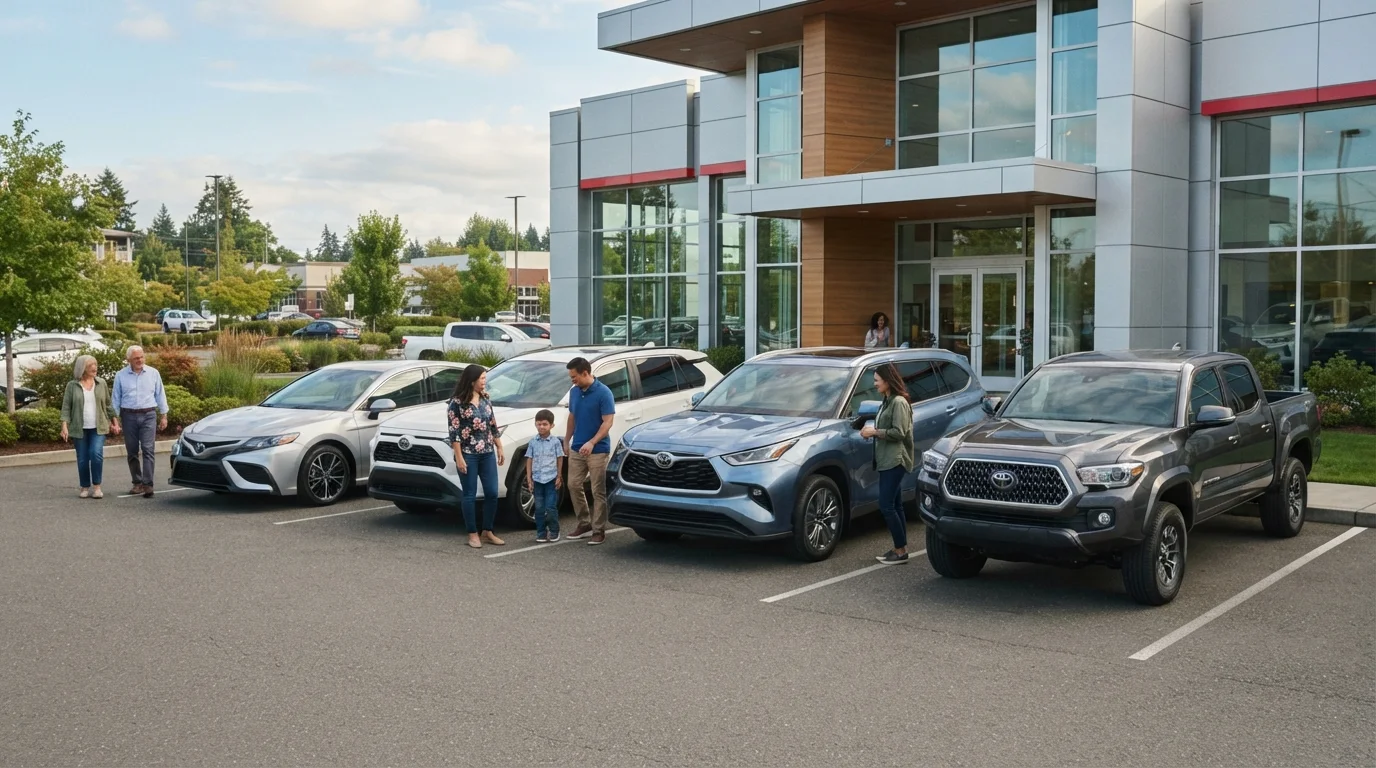
Toyota also sells the bZ4X, a battery electric vehicle (BEV) with no gasoline engine. The brand has stated plans to expand its electric offerings, though the pace and specific models are subject to change.
Reliability reputation and what it is based on
Toyota is frequently cited in reliability surveys, including annual reports from J.D. Power and Consumer Reports. Both organizations track things like reported problems per vehicle and long-term ownership costs. Toyota has consistently placed near or above industry averages in these surveys, though individual model results vary year to year.
For context on what these scores measure and where they fall short, what reliability ratings actually tell you is worth reading before drawing conclusions from any single ranking.
Toyota's reputation for longevity is often compared to Honda's. Honda's reliability evidence covers how that brand's track record holds up under scrutiny, which can be useful for side-by-side thinking.
| Founded | 1937 (Toyota Motor Corporation incorporation) |
| Headquarters | Toyota City, Aichi Prefecture, Japan |
| U.S. market entry | 1958 (Toyopet Crown export) |
| Luxury division | Lexus (launched 1989) (North American market) |
| Top-selling U.S. model | RAV4 (Based on recent annual U.S. sales data) |
| Hybrid technology debut | Prius, 1997 (Japan) |
| North American assembly plants | Kentucky, Indiana, Texas, Alabama |
| Sienna powertrain | Hybrid only since 2021 |
Brand positioning and buyer profile
Toyota positions itself as a mass-market brand focused on practicality, fuel efficiency, and low ownership costs. It does not market itself as a performance-oriented or luxury brand at the Toyota nameplate level, though Lexus serves that purpose within the corporate family. Brand tiers explained covers where Toyota and Lexus sit in the broader automaker hierarchy.
Toyota vehicles appear frequently in the used car market, partly because of high production volumes and partly because older models tend to stay in service longer. Buyers researching pre-owned options can find more context at the used cars hub.
For anyone factoring insurance costs into a vehicle comparison, coverage rates vary by model, trim, and driver history. General guidance on how vehicle type affects premiums is available at the auto insurance hub.
Ford's brand history and model range offers a comparable overview for readers weighing Toyota against a major domestic competitor.
This article is for general informational purposes only and does not constitute financial, insurance, or purchasing advice. Coverage, loan terms, and vehicle costs vary by individual circumstances. Consult a licensed professional for advice specific to your situation.