

Key Takeaways
- Entry-level brands focus on affordability, fuel economy, and low ownership costs.
- Mid-range brands sit between entry-level and luxury, often offering more standard technology and comfort features.
- Luxury brands price in higher-grade materials, more powerful powertrains, and more extensive service programs.
- A single corporate parent, such as General Motors or Volkswagen Group, commonly owns brands across multiple tiers.
- Tier placement affects resale value, insurance costs, and parts availability over the life of the vehicle.
- Reliability and quality are not guaranteed by tier; they vary by brand and model within every category.
Car brand tiers
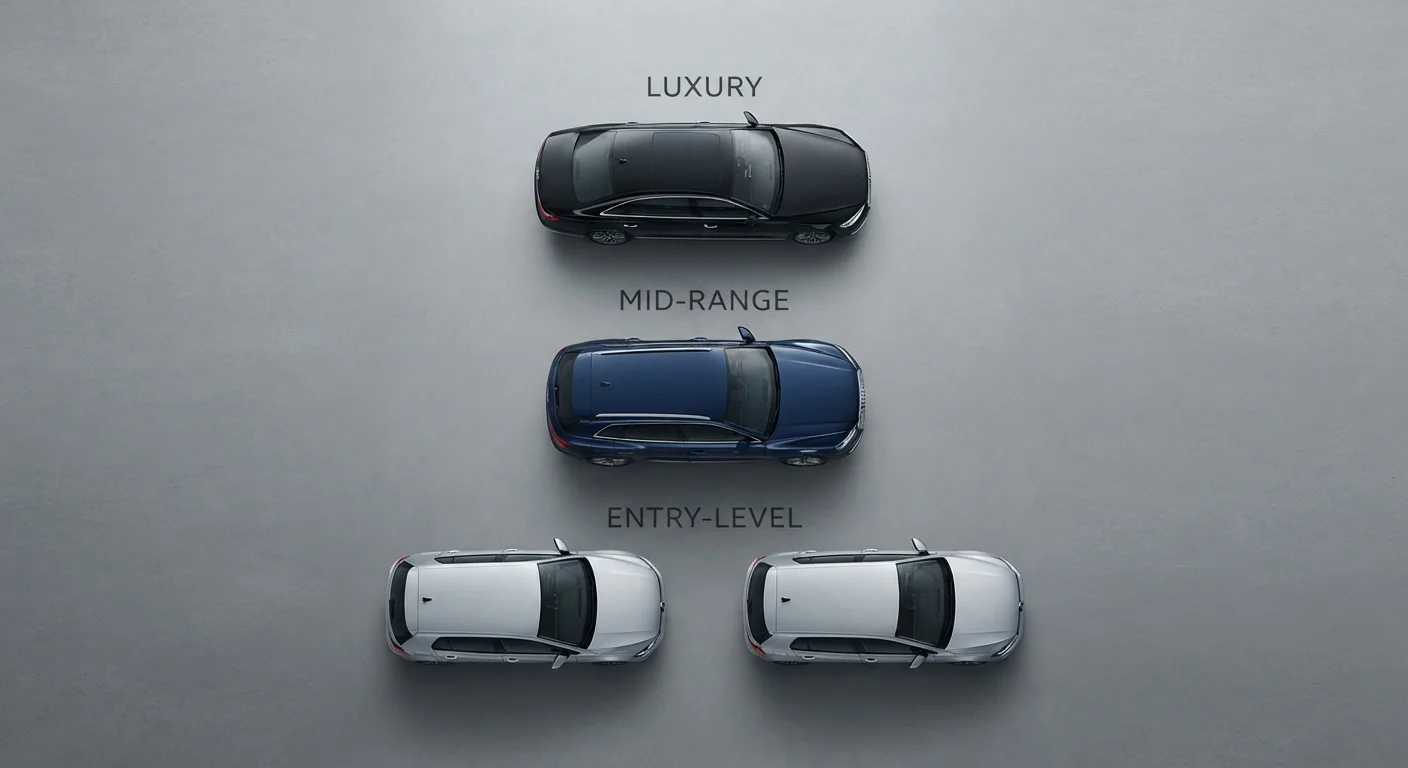
Car brand tiers are the categories automakers and industry observers use to group vehicle brands by price point, feature content, and intended buyer. The three common tiers are entry-level (mainstream), mid-range, and luxury. A single parent company often owns brands across more than one tier, selling essentially different versions of the same ownership experience under different names.
Within the luxury tier, some analysts separate near-luxury (sometimes called premium) from ultra-luxury brands, adding a fourth sub-category. This article covers the three-tier framework most commonly used in consumer research.
How the tier system works
Automakers divide their brand portfolios into tiers to reach buyers with different budgets and priorities. A parent company such as General Motors sells Chevrolet at the entry level, Buick in the mid-range, and Cadillac as its luxury nameplate. Volkswagen Group does something similar with Volkswagen, Audi, and Porsche. The tiers exist because one brand cannot efficiently serve every segment of the market.
The tier a brand occupies shapes nearly every aspect of the vehicle: base price, standard feature content, materials quality, powertrain options, and dealer experience. It also affects costs you carry after purchase, including insurance, parts, and scheduled maintenance. What separates luxury and mainstream brands goes deeper into those cost differences if you want a direct comparison.
Entry-level brands
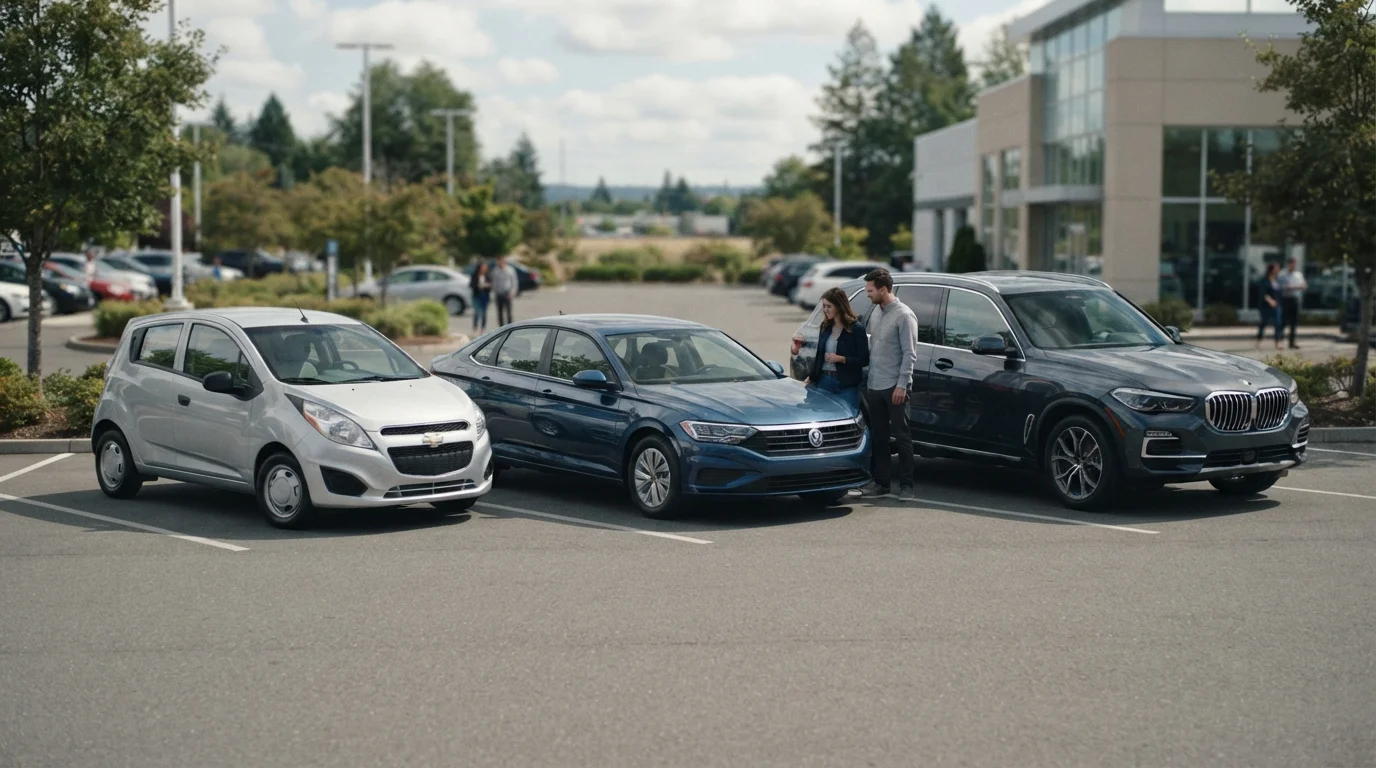
Entry-level brands, often called mainstream or volume brands, account for the largest share of U.S. vehicle sales. Chevrolet, Ford, Toyota, Honda, Hyundai, and Kia are examples that appear consistently in this category. These brands prioritize purchase price, fuel economy, and low cost of ownership. Parts are widely available, and most independent repair shops can service them without specialized tools.
Reliability within this tier varies. Toyota's model lineup and reputation is one case study in how an entry-level brand can build a long track record for durability. Ford's brand history and model range shows a different approach, with a lineup that spans basic commuter vehicles to performance and work trucks under one nameplate.
Buyers considering a used entry-level vehicle generally find broader inventory and more competitive pricing, which the used car buying process resource covers in detail.
3
Primary tiers in most brand portfolios
Most major automakers structure their consumer brand portfolios around entry-level, mid-range, and luxury designations, though some add a fourth ultra-luxury sub-tier.
Top 10
U.S. sales consistently dominated by entry-level brands
Annual U.S. vehicle sales data from sources such as Cox Automotive consistently show that mainstream volume brands occupy the majority of the top-selling model slots.
Mid-range brands
The mid-range tier sits between mainstream volume brands and prestige luxury. Buick, Acura, Lincoln, and Genesis are examples commonly placed here. These brands typically share platforms or components with entry-level siblings from the same parent company but add quieter cabins, more standard safety technology, and upgraded interior materials.
Because mid-range brands often use shared engineering, their repair costs can be more manageable than those of top-tier luxury brands while still offering more comfort than a comparable mainstream model. The tradeoff is that the added features come at a higher purchase price, and resale values vary more than in either adjacent tier.
What reliability ratings actually measure is worth reading before treating a mid-range badge as a quality guarantee, since rating methodologies capture some ownership factors but not all.
Luxury brands
Luxury brands, including Mercedes-Benz, BMW, Lexus, and Cadillac, price their vehicles to reflect higher-grade materials, more powerful or more refined powertrains, and extended service programs. Dealers in this tier typically offer loaner vehicles, concierge scheduling, and dedicated service advisors as part of the ownership package.
Repair costs in the luxury tier are generally higher because parts are more specialized and labor rates at authorized dealers reflect that specialization. Depreciation can be steeper in the first few years, which is why used luxury vehicles sometimes appear affordable relative to their original sticker price. Carrying costs beyond the purchase price, including insurance premiums and maintenance, tend to remain elevated regardless of what you paid at acquisition.
How brands build their model lineups explains why luxury brands often keep their catalogs smaller than mainstream brands, and how to read a brand's warranty coverage can help you compare what service commitments actually include across tiers.
This article is for general informational and educational purposes only. It does not constitute financial, insurance, or purchasing advice. Consult a licensed professional for guidance specific to your circumstances.