

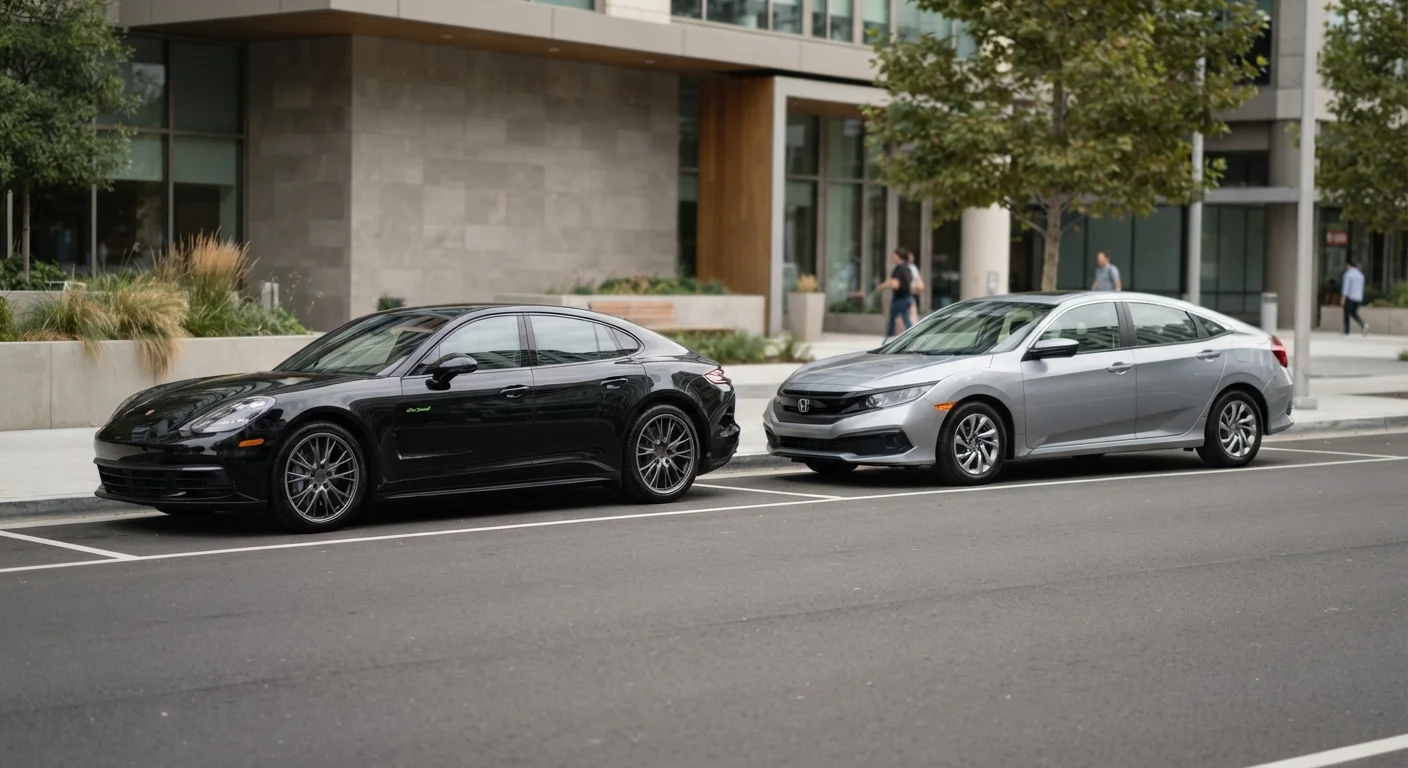
Key Takeaways
- Luxury pricing reflects materials, engineering tolerances, and ownership services, not just a badge.
- Mainstream brands have closed much of the technology gap on safety and infotainment features.
- Insurance and maintenance costs for luxury vehicles are typically higher than for mainstream equivalents.
- Reliability records vary within both tiers; brand tier alone does not predict dependability.
- Depreciation tends to be steeper for luxury vehicles, which affects resale and used-car value.
- The right choice depends on total ownership cost, not purchase price alone.
Option A
Luxury car brands
Higher-cost vehicles with premium materials, advanced technology, and brand-specific ownership programs.
Best for: Buyers who prioritize cabin refinement, performance engineering, or brand prestige and can absorb higher purchase, insurance, and maintenance costs.
Option B
Mainstream car brands
Volume-market vehicles built for broad affordability, practical reliability, and accessible ownership costs.
Best for: Buyers focused on dependable transportation, lower total cost of ownership, and wide dealer and parts availability.
If you want the lowest total cost of ownership over five or more years
Mainstream car brands
Lower purchase price, cheaper insurance premiums, and more affordable routine maintenance generally make mainstream vehicles less expensive to own long-term.
If ride quality, interior materials, and performance engineering are priorities
Luxury car brands
Luxury manufacturers invest heavily in noise insulation, suspension tuning, and higher-grade materials that mainstream models at comparable price points typically do not match.
If you are buying used and want more features per dollar
Luxury car brands
Steeper depreciation means a used luxury vehicle can carry original premium features at a price closer to a new mainstream model, though ownership costs remain higher.
Where the price difference actually goes
A luxury vehicle's sticker price is not a simple markup on a comparable mainstream model. The cost gap typically reflects several distinct engineering and business choices made well before a car reaches a dealership.
Interior materials are the most visible factor. Luxury brands source higher-grade leather, wood, and metal trim, and use thicker acoustic insulation to reduce road and wind noise. Mainstream brands use functional materials engineered to a cost target; they do the job, but the sensory experience differs noticeably.
Powertrain engineering also differs. Luxury manufacturers generally tune engines and transmissions for refinement rather than just output, which involves tighter manufacturing tolerances and more extensive testing. Suspension systems in luxury vehicles are frequently calibrated to absorb imperfections more quietly, sometimes using adaptive dampers that adjust in real time.
Finally, luxury brands wrap the purchase in ownership services: dedicated concierge lines, loaner vehicles during service, and longer or more comprehensive warranty programs on some models. These programs carry real operating costs that are built into the vehicle price. Warranty terms vary widely across brands, and reading them carefully can reveal meaningful differences between tiers.
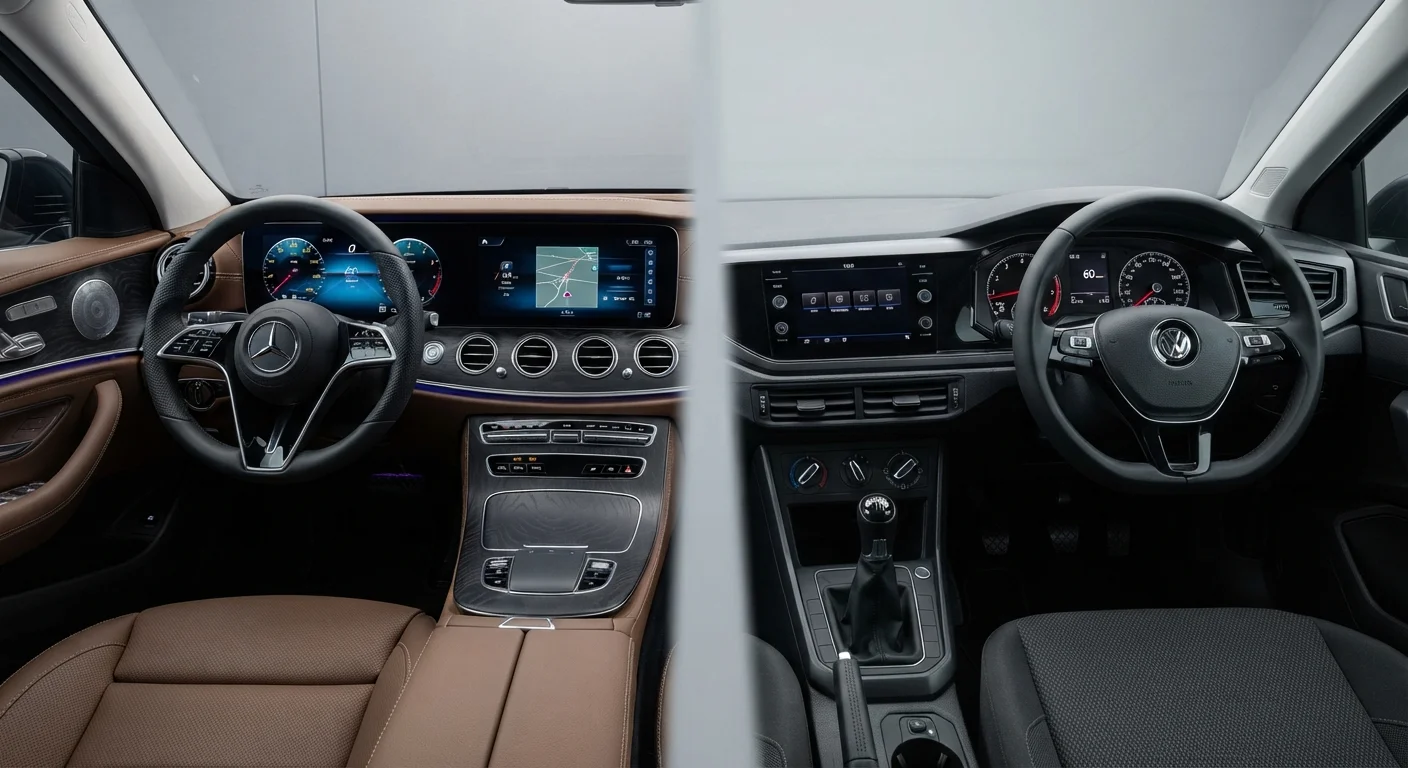
What mainstream brands have caught up on
The technology gap between luxury and mainstream vehicles has narrowed considerably over the past decade. Automatic emergency braking, lane-keeping assist, and adaptive cruise control, once found only on premium models, now appear as standard or low-cost options on many mainstream vehicles. Touchscreen infotainment systems with wireless smartphone integration are similarly widespread across both tiers.
Fuel economy and powertrain efficiency have also converged. Mainstream brands have invested heavily in turbocharged four-cylinder engines and hybrid systems that deliver competitive efficiency without the price premium of a luxury powertrain.
Reliability is one area where the luxury advantage is not guaranteed. Third-party reliability data, including annual surveys published by organizations such as J.D. Power and Consumer Reports, show that some mainstream brands consistently score above certain luxury nameplates. Reliability ratings measure specific things and leave others out, so it is worth understanding what any ranking actually captures before treating it as a complete picture.
| Criterion | Luxury brands | Mainstream brands |
|---|---|---|
| Average purchase price range | $45,000 and above, many above $60,000 | Typically $20,000 to $45,000 |
| Interior materials | Premium leather, metal, high-grade plastics | Functional cloth, vinyl, standard plastics |
| Noise insulation | Heavy acoustic dampening standard | Moderate, varies by trim level |
| Insurance premiums | Generally higher due to repair costs | Generally lower |
| Scheduled maintenance cost | Higher per visit, often dealer-only | Lower, more independent shop options |
| Depreciation rate (years 1 to 3) | Typically steeper percentage loss | More gradual on average |
| Advanced safety tech | Standard across most models | Standard or low-cost option on many models |
| Reliability record | Varies by brand; not uniformly higher | Some brands rank above luxury peers |
The ownership costs buyers often overlook
Purchase price is only part of what a vehicle costs. Luxury vehicles carry higher insurance premiums on average because repair costs are greater: proprietary parts, specialized labor, and more complex systems all push claims costs up. Understanding how insurers assess vehicles can help buyers anticipate this before committing to a purchase.
Scheduled maintenance is another gap. Luxury brands often require synthetic oil, brand-specific fluids, and service at authorized dealers, which costs more per visit than a mainstream service appointment. Independent repair shops can work on luxury vehicles, but some systems require dealer-level diagnostic tools.
Depreciation is the financial factor that surprises many buyers. Luxury vehicles tend to lose a larger percentage of their value in the first three years than mainstream models. This matters for buyers who plan to trade in or sell, and it also creates opportunity for used-car buyers. A certified pre-owned luxury vehicle can carry many original premium features at a lower price, though ongoing ownership costs remain similar to a new example. What every buyer should know before purchasing a pre-owned vehicle covers what to check before buying used in either tier.
For a structured look at where specific brands sit across the full market, car brand tiers explained breaks down how automakers position their lineups and what each tier generally includes.