

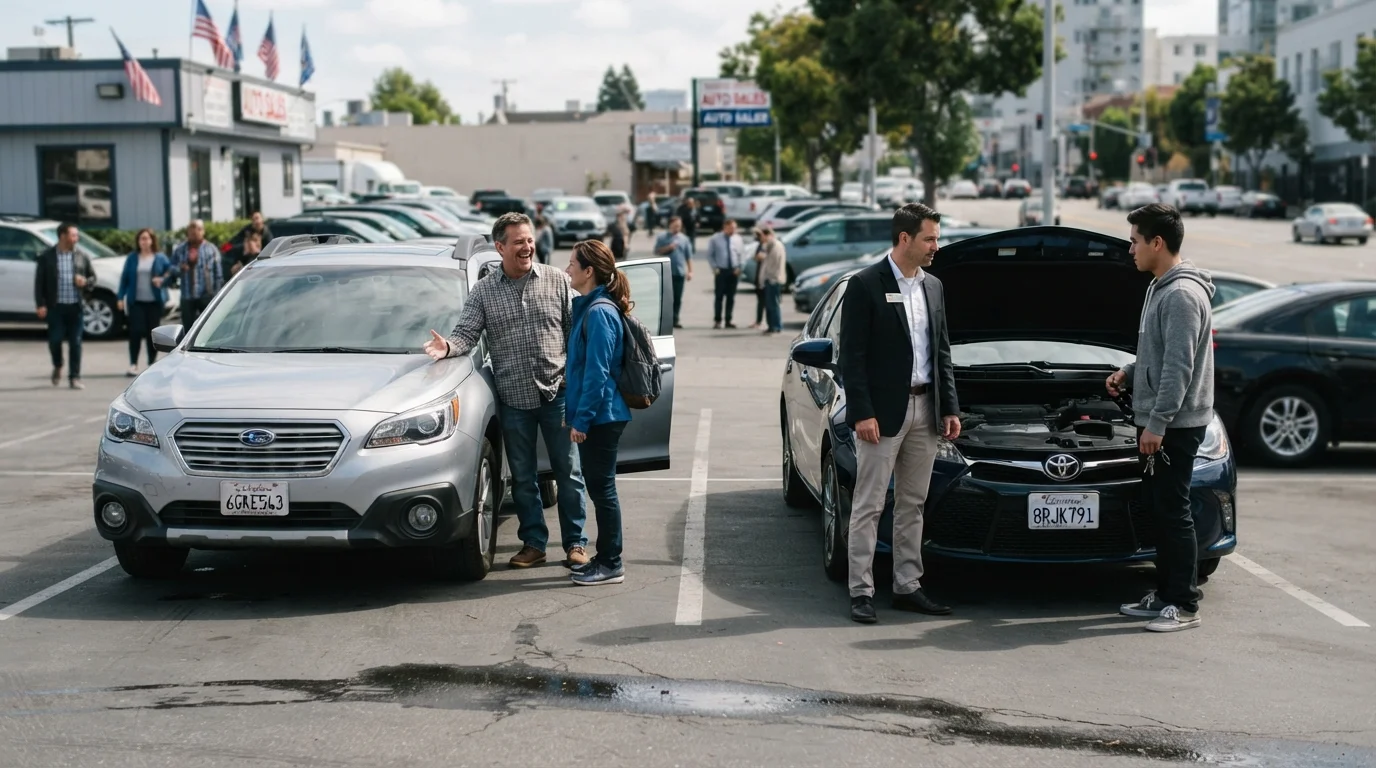
Our Verdict
Neither route is universally better. Private sales can cost less upfront but shift more risk to the buyer. Dealerships add process and oversight that reduce some of that risk, usually at a higher price. Your decision will likely come down to how much time you have, how confident you are inspecting a vehicle, and whether you need financing.
| Best for | Recommended |
|---|---|
| Buyers comfortable inspecting vehicles and handling their own paperwork | Private seller |
| Buyers who want financing options and some consumer protections | Dealership |
| First-time used car buyers with limited mechanical knowledge | Dealership |
| Cash buyers with a specific make and model already researched | Private seller |
What each path actually involves
Buying from a private seller means purchasing directly from the current owner, typically someone selling a vehicle they no longer need. The transaction is usually cash or a cashier's check, paperwork is minimal, and the process moves as fast as both parties agree. Buying from a dealership, whether a franchise lot tied to a manufacturer or an independent used-car operation, involves a business with staff, inventory, and a formal sales process.
The core difference is accountability. A dealer is a licensed business subject to the Federal Trade Commission's Used Car Rule, which requires a Buyers Guide disclosing warranty status on every vehicle. Private sellers have no equivalent obligation. That gap shapes nearly every other comparison between the two.
For a full walkthrough of the steps involved in either route, see the used car buying process, start to finish.
Price and negotiation
Private sellers generally list vehicles below dealer retail. They have no overhead to recover, no reconditioning fees, and often more motivation to sell quickly. That creates room for negotiation, but the asking price is not always well-researched. Some private listings are priced too high because the seller relied on emotional attachment rather than current market data.
Dealerships price vehicles to cover reconditioning, lot costs, and profit margin. That means sticker prices are typically higher. Dealers also add documentation fees, which vary by state but can range from under $100 to several hundred dollars. These fees are sometimes negotiable and sometimes not, depending on the dealer.
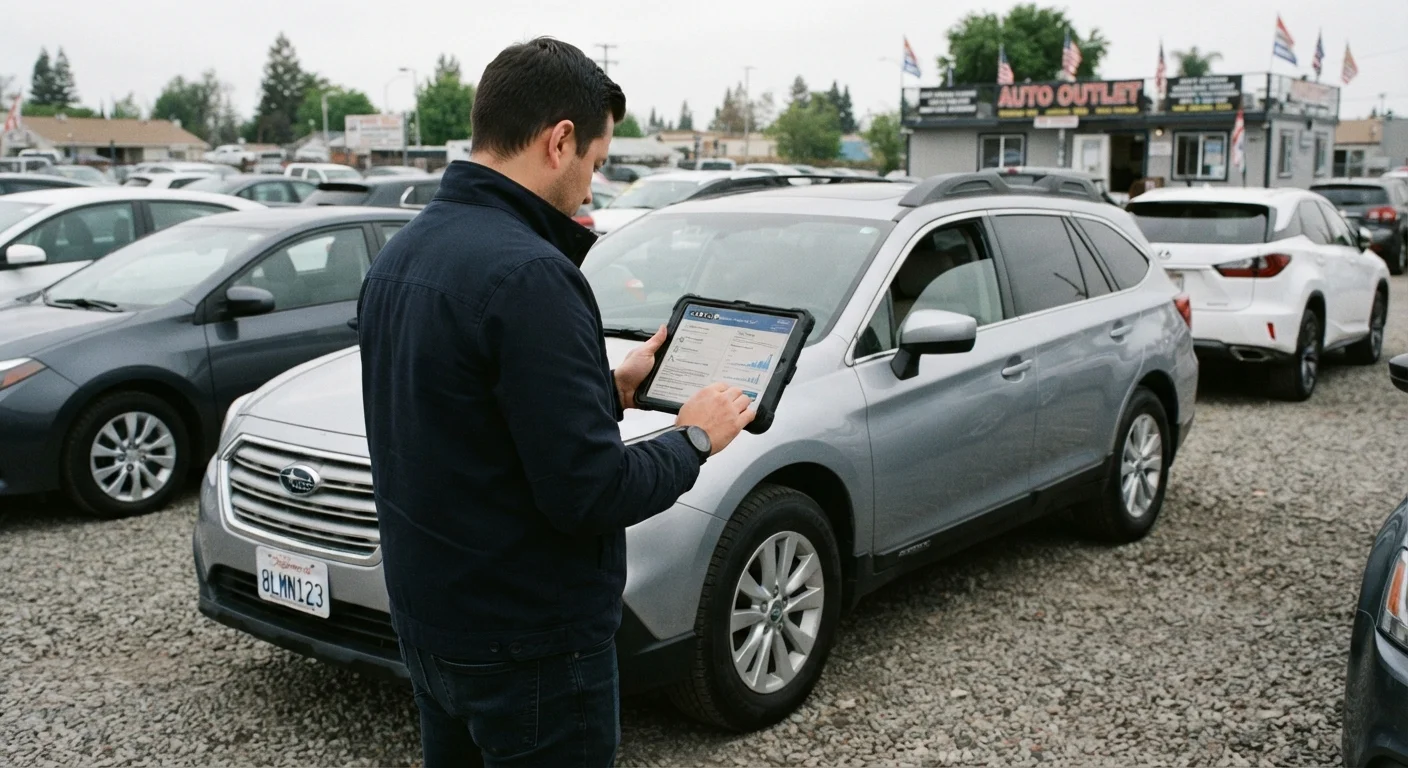
Understanding how a car's value changes over time helps in either context. How depreciation works for used car buyers explains what drives price differences between similar vehicles.
Condition, history, and inspection
Private sellers may or may not have service records. Some owners are meticulous and can hand over years of maintenance receipts. Others have none. You generally cannot verify what you are told without independent research.
Dealerships, particularly franchise dealers, often perform a multi-point inspection and may offer certified pre-owned (CPO) programs, which include additional mechanical checks and limited warranties. Independent dealers vary widely in how thoroughly they inspect vehicles before resale.
| Private seller | Dealership | |
|---|---|---|
| Typical price | Often below retail | At or above retail |
| Warranty | Sold as-is in most states | Buyers Guide required; CPO available |
| Financing | Buyer arranges independently | On-site financing options available |
| Consumer protections | Limited | Subject to FTC Used Car Rule |
| Paperwork handled by | Buyer and seller jointly | Dealer handles most steps |
| Negotiation flexibility | Varies by seller motivation | Varies by dealer and inventory age |
In either case, pulling a vehicle history report using the VIN (Vehicle Identification Number) is a standard step. It can reveal prior accidents, title problems, odometer discrepancies, and previous owners. An independent pre-purchase inspection by a mechanic you hire separately adds another layer. This applies to dealer inventory as much as private listings.
Reading a used car listing without getting misled covers how to interpret the details, and omissions, in any listing you find online.
Financing and paperwork
Private sales are almost always cash transactions. If you need a loan, you arrange it yourself through a bank or credit union before you shop. That is not complicated, but it does require a few extra steps before you can make an offer.
Dealerships arrange financing in-house through relationships with lenders. This convenience has a cost: dealer-arranged loans sometimes carry higher interest rates than what a bank or credit union would offer directly. It is worth comparing both before agreeing to dealer financing. Dealer financing vs. direct lending lays out how those two paths compare.
Title transfer and registration paperwork is handled by the dealer, which saves time. In a private sale, both parties complete the title transfer, and the buyer handles registration with the state DMV. Requirements vary by state, so check your state's motor vehicle agency for the current process.
This article is for general informational purposes only and does not constitute financial, legal, or insurance advice. Consult a qualified professional for guidance specific to your situation.