

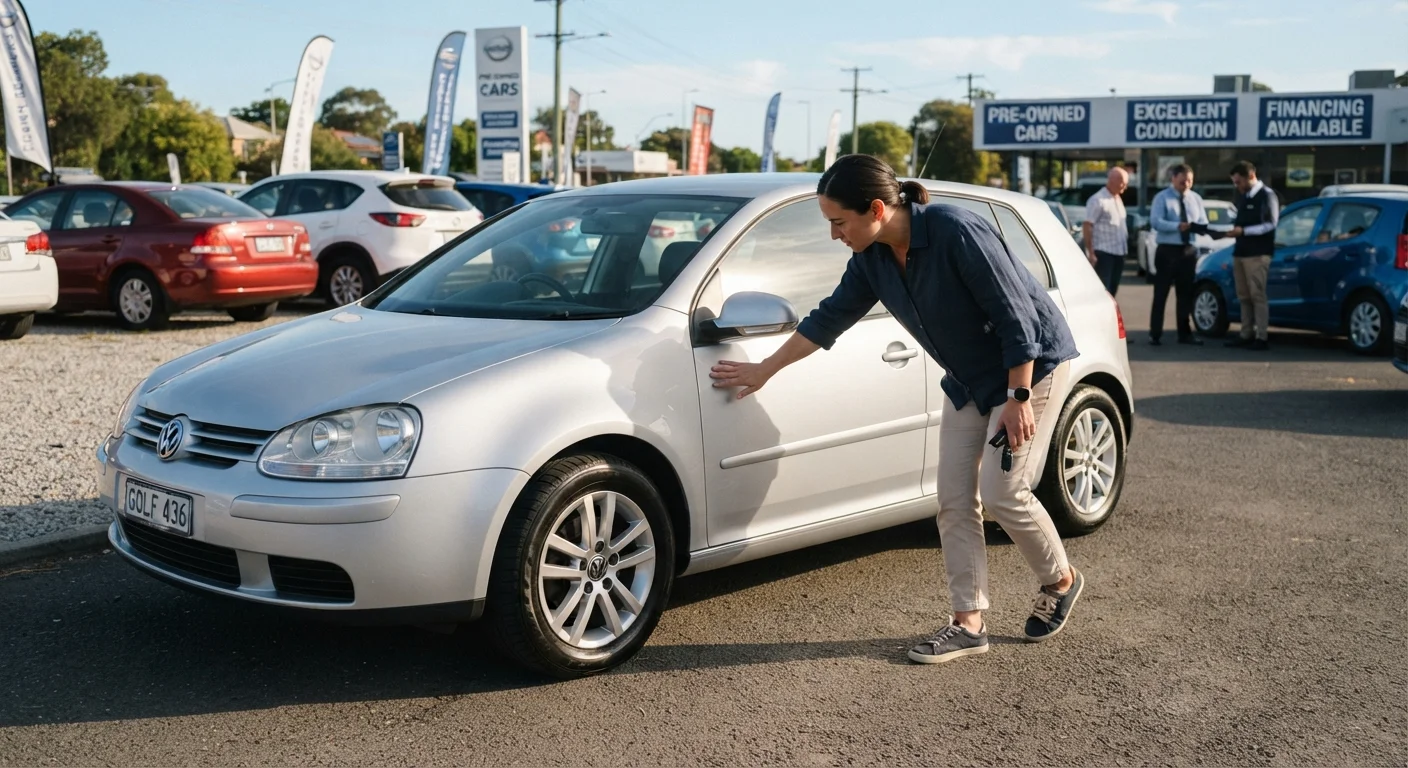
Key Takeaways
- Setting a total ownership budget before browsing saves time and prevents overspending.
- A vehicle history report and a pre-purchase inspection are two separate steps, and both matter.
- Financing terms vary widely, so comparing loan offers before visiting a dealer gives you more leverage.
- You must have insurance in place before driving the car off the lot in most states.
- The paperwork at signing transfers legal ownership; read each document before you sign.
Start here
Set a realistic budget before you shop
Next
Decide where to buy
Then
Research the vehicle and its history
Almost there
Inspect, test drive, and negotiate
Final steps
Arrange financing and insurance
Done
Complete the paperwork and take ownership
Set a realistic budget before you shop
The sticker price is only one part of what a used car actually costs. Before you search a single listing, add up what you can afford each month across all vehicle-related expenses: a loan payment if you are financing, insurance, fuel, registration, and routine maintenance. Ownership costs beyond the sticker price cover this in detail, but a rough starting point is to keep total vehicle expenses below 15 to 20 percent of your monthly take-home pay.
From that monthly ceiling, work backward to a purchase price range. If you plan to finance, the loan term and interest rate will determine how much car that monthly number actually buys. A shorter loan term means higher monthly payments but less interest paid overall. Use that math to set a firm ceiling before you start browsing, so a well-presented listing does not push you past what you can comfortably handle.
Vehicle history report
A document that compiles recorded information about a car's past, including accidents, title changes, number of owners, and odometer readings. Common providers include Carfax and AutoCheck.
Pre-purchase inspection
An examination of a used vehicle by an independent mechanic before you buy it. The mechanic checks for mechanical problems, rust, and other issues that a history report cannot show.
Clean title
A car title with no major recorded problems such as salvage, flood damage, or lien. A clean title means the seller legally owns the vehicle free of those complications.
Annual percentage rate (APR)
The yearly cost of borrowing money, expressed as a percentage. On a car loan, a lower APR means you pay less interest over the life of the loan.
Pre-approval
A lender's conditional agreement to loan you up to a certain amount at a certain rate, based on a credit check, before you choose a specific vehicle.
Odometer disclosure
A legal statement the seller signs confirming the mileage shown on the odometer is accurate to the best of their knowledge. It is required in most U.S. vehicle sales.
Decide where to buy
Used cars are sold through franchised dealerships, independent dealers, and private sellers. Each path has real trade-offs worth weighing. Dealers often offer certified pre-owned programs, financing on-site, and some form of return policy, though their prices tend to be higher. Private sellers generally ask less but offer no warranty, and the transaction puts more responsibility on you to verify the car's condition and title status.
Buying from a private seller vs. a dealership walks through the specific differences in detail. Whichever route you choose, the inspection and history-check steps in the next section apply equally.
Research the vehicle and its history
Once you have a specific car in mind, pull the vehicle identification number (VIN) and run two checks. First, order a vehicle history report. This will show recorded accidents, title changes, how many owners the car has had, and whether the odometer readings across service visits are consistent. Second, search the NHTSA recall database using the same VIN to see whether any open safety recalls are unresolved on that vehicle.
Neither of those steps replaces a physical inspection. History reports only capture events that were formally reported, so unreported accidents, flood damage, and gradual mechanical wear will not appear.
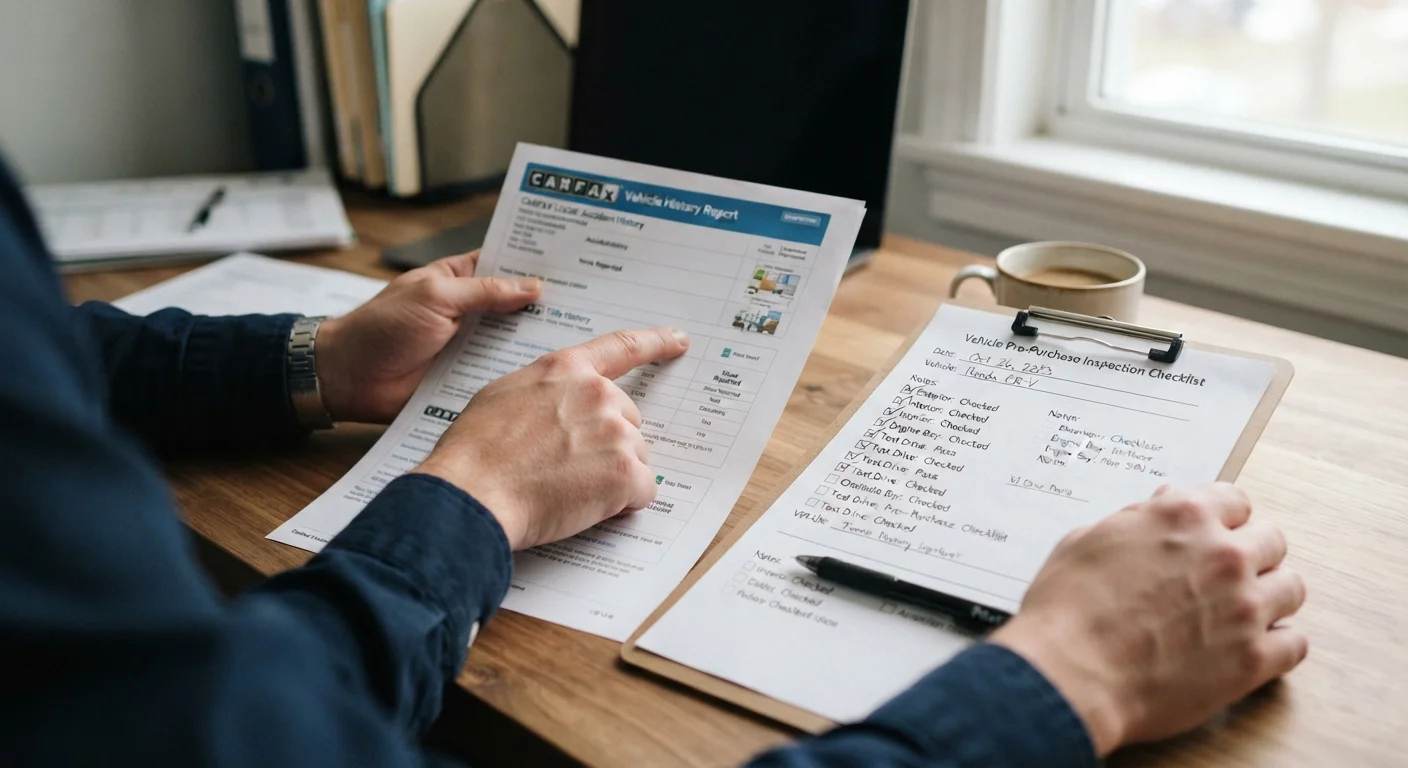
See the used car buying checklist for a full list of what to verify on title status, mileage, and paperwork before you move forward.
Inspect, test drive, and negotiate
Arrange for an independent mechanic to inspect any vehicle you are seriously considering. This is a separate step from the test drive. The mechanic will put the car on a lift, check the brakes, suspension, engine, transmission, and look for rust or signs of prior body repair that the history report did not capture.
The test drive is your chance to notice how the car behaves in real conditions: whether it pulls to one side, whether the brakes feel firm, whether there are any unusual sounds at highway speed. Drive it on surface streets and a highway if possible.
After the inspection results are back, you have real information to bring to the negotiating table. If the mechanic found items that will need attention soon, those costs are reasonable to raise in the price discussion. Negotiating from verified facts is more productive than negotiating from general sentiment.
Never skip the independent inspection
Sellers, including dealers, have a financial interest in closing the sale. An independent mechanic has no such stake. A pre-purchase inspection typically costs between $100 and $200 and can surface thousands of dollars worth of problems before you commit. If a seller refuses to allow an inspection, treat that as a serious warning sign.
Arrange financing and insurance
If you are not paying cash, getting pre-approved through a bank or credit union before finalizing the sale gives you a rate to compare against any financing the seller or dealer offers. Used car financing explained covers how loan terms and interest rates work, and the auto financing first-timer's guide walks through the full loan process step by step.
Insurance must be in place before you drive the car on public roads. Most states require at least liability coverage, and lenders require comprehensive and collision if you are financing. Contact your insurer before the day of purchase. For a broader look at how auto policies work, the auto insurance beginner's guide explains coverage types and what you are required to carry.
Get competing loan offers first
Applying for pre-approval through a credit union or bank before visiting a dealer gives you a baseline rate to compare. Dealer financing can sometimes beat outside offers, but you will not know unless you have something to measure it against. Submitting multiple loan applications within a 14-day window typically counts as a single inquiry for credit scoring purposes.
This article is for general informational purposes only and is not financial, legal, or insurance advice. Loan terms, insurance requirements, and costs vary by lender, insurer, and state. Consult a licensed financial adviser or insurance agent for guidance specific to your situation.
Complete the paperwork and take ownership
At signing, the core documents are the signed title from the seller, a bill of sale, and an odometer disclosure statement. Read each one before you sign. On the title, confirm the seller's name matches the name on the title exactly, and that there are no lienholders listed unless those liens have been paid off and documented.
After the sale, take the signed title, bill of sale, and any loan documents to your state DMV to register the vehicle in your name. You will pay a title transfer fee, registration fee, and typically sales tax on the purchase price. Some states require a safety or emissions inspection before they will complete registration.
State rules vary on paperwork and fees
Title transfer procedures, sales tax rates, and registration fees differ from state to state. Some states also require an emissions or safety inspection before you can register a vehicle. Check your state's DMV website for the exact requirements in your area.
Once registration is complete, the car is legally yours. Keep copies of all purchase and financing documents in a safe place; you may need them for insurance claims, future resale, or loan payoff.