

Key Takeaways
- Most states require at least liability coverage before you can legally drive.
- Liability, collision, and comprehensive are the three building blocks of most policies.
- Your premium depends on factors like your driving record, vehicle, location, and chosen deductible.
- Reading the declarations page tells you exactly what you are and are not covered for.
- Shopping for coverage means comparing limits and deductibles, not just the monthly price.
Start here
How auto insurance works
Next
Coverage types you need to know
Then
What states require you to carry
When you're ready
What to compare when shopping
How auto insurance works
Auto insurance is a contract between you and an insurer. You pay a premium on a regular schedule, and in return the insurer agrees to pay for certain losses or liabilities described in the policy. Each policy is made up of separate coverages, and each coverage has its own rules about what it pays for, up to what dollar amount, and after what deductible.
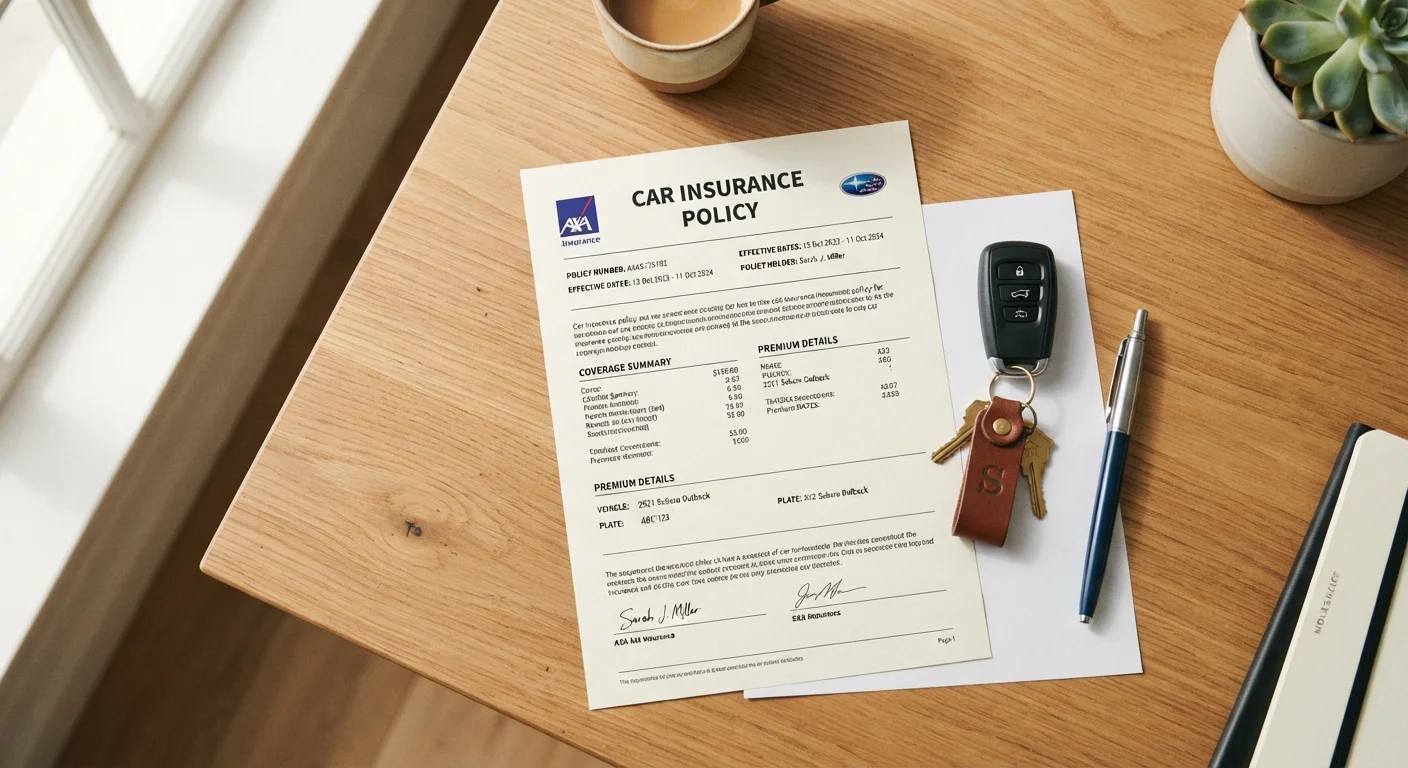
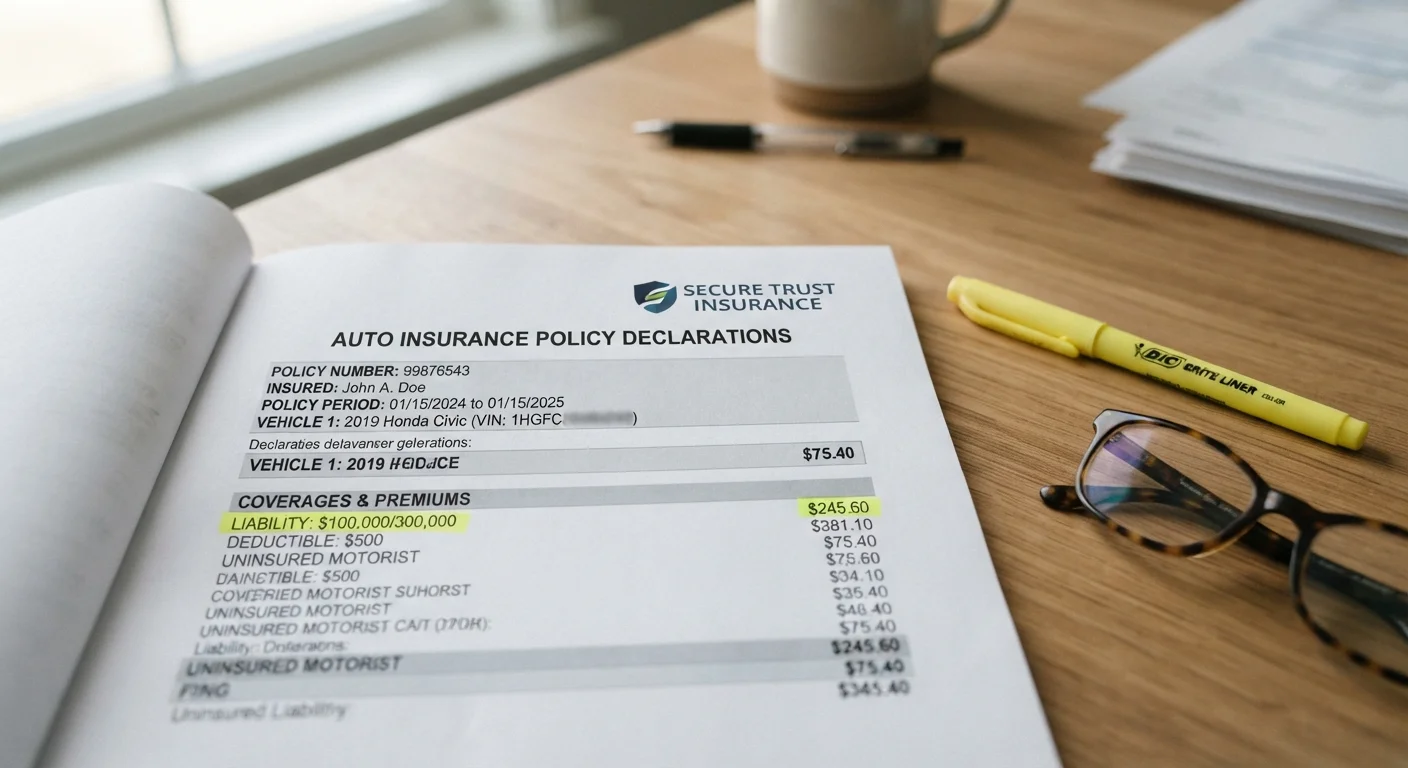
The document that governs everything is the policy itself. The declarations page at the front summarizes your coverages, limits, and vehicle information. If you ever have a question about what you are covered for, that page is the first place to check.
Premium
The amount you pay for your insurance policy, typically billed monthly or every six months.
Deductible
The dollar amount you pay out of pocket on a covered claim before your insurer covers the rest.
Coverage limit
The maximum amount your insurer will pay for a covered claim. Any costs above that limit are your responsibility.
Declarations page
A summary page at the front of your policy that lists your name, vehicle, coverages, limits, and deductible amounts.
Liability coverage
Coverage that pays for injuries or property damage you cause to someone else in an at-fault accident.
No-fault insurance
A system used in some states where each driver's own insurer pays for their medical expenses after an accident, regardless of who caused it.
If you are also navigating the process of buying a vehicle, the used car buying process walkthrough covers what to expect before and after the purchase, including when you need to have insurance in place.
Coverage types you need to know
Most auto policies are built from a set of standard coverage types. You can combine them depending on your needs and budget.
- Liability pays for bodily injury and property damage you cause to someone else. It does not pay for your own injuries or vehicle damage.
- Collision covers damage to your car from a crash, regardless of who was at fault.
- Comprehensive covers damage from non-collision events such as theft, fire, flooding, and falling objects.
- Medical payments or personal injury protection (PIP) covers medical expenses for you and your passengers after an accident, with PIP also covering lost wages in some states.
- Uninsured/underinsured motorist covers your losses when the at-fault driver has no insurance or too little to cover your costs.
For a detailed look at each of these, see standard auto policy coverage types, explained one by one.
What states require you to carry
Nearly every state requires drivers to carry a minimum level of liability insurance. The most common requirement is a split limit, expressed as three numbers such as 25/50/25. Those numbers represent: the maximum payout per injured person (in thousands), the maximum per accident for all injuries, and the maximum for property damage.
Some states use a no-fault system, which requires personal injury protection regardless of who caused the accident. A handful of states allow drivers to post a bond or deposit in place of insurance, but most people use a standard policy.
Minimum coverage may not be enough
State-mandated minimums set a legal floor, not a recommended level of protection. If you cause a serious accident, the costs can exceed minimum limits quickly, leaving you personally responsible for the difference. Talk to a licensed agent about limits that reflect your financial situation.
Lenders also set their own requirements. If you have an auto loan or lease, the lender will typically require both collision and comprehensive coverage until the vehicle is paid off. This applies whether or not your state mandates it. If you are new to auto financing, the auto financing overview for first-timers explains what lenders generally expect.
How insurers set your premium
Insurers use several factors to calculate your premium. These vary by state because some states restrict which factors can be used, but common inputs include:
- Your driving record (accidents, violations, claims history)
- The vehicle you drive (make, model, age, safety features, repair costs)
- Where you live and where the vehicle is garaged
- How many miles you drive annually
- Your age and, in many states, your credit-based insurance score
- The coverage levels and deductibles you select
Choosing a higher deductible lowers your premium but increases what you pay when you file a claim. Choosing lower coverage limits also reduces your premium but leaves you with more exposure. Neither adjustment is automatically the right move; it depends on your financial situation.
Read the declarations page first
When you receive any policy, go straight to the declarations page before anything else. It summarizes your coverages, limits, and deductibles in one place. If something looks different from what you requested, contact your insurer before the policy takes effect.
What to compare when shopping
When reviewing quotes, the monthly price alone does not tell you much. Two policies at the same price can offer very different levels of protection if their limits or deductibles differ.
Compare quotes on the same terms: identical coverage types, identical limits, and identical deductibles. Look at how the insurer handles claims, including their process, timelines, and any exclusions written into the policy. An exclusion is a specific situation or type of damage the policy will not cover.
At renewal, your situation may have changed in ways that affect the coverage you need. The auto insurance policy renewal checklist can help you check whether your current policy still fits. If you own a home, bundling home and auto insurance is worth understanding as a way some insurers structure multi-policy pricing.
This article provides general information about auto insurance for educational purposes only. It is not personalized insurance, financial, or legal advice. Coverage requirements, exclusions, and pricing vary by state and insurer. Read your actual policy documents and consult a licensed insurance agent or adviser for guidance specific to your situation.