

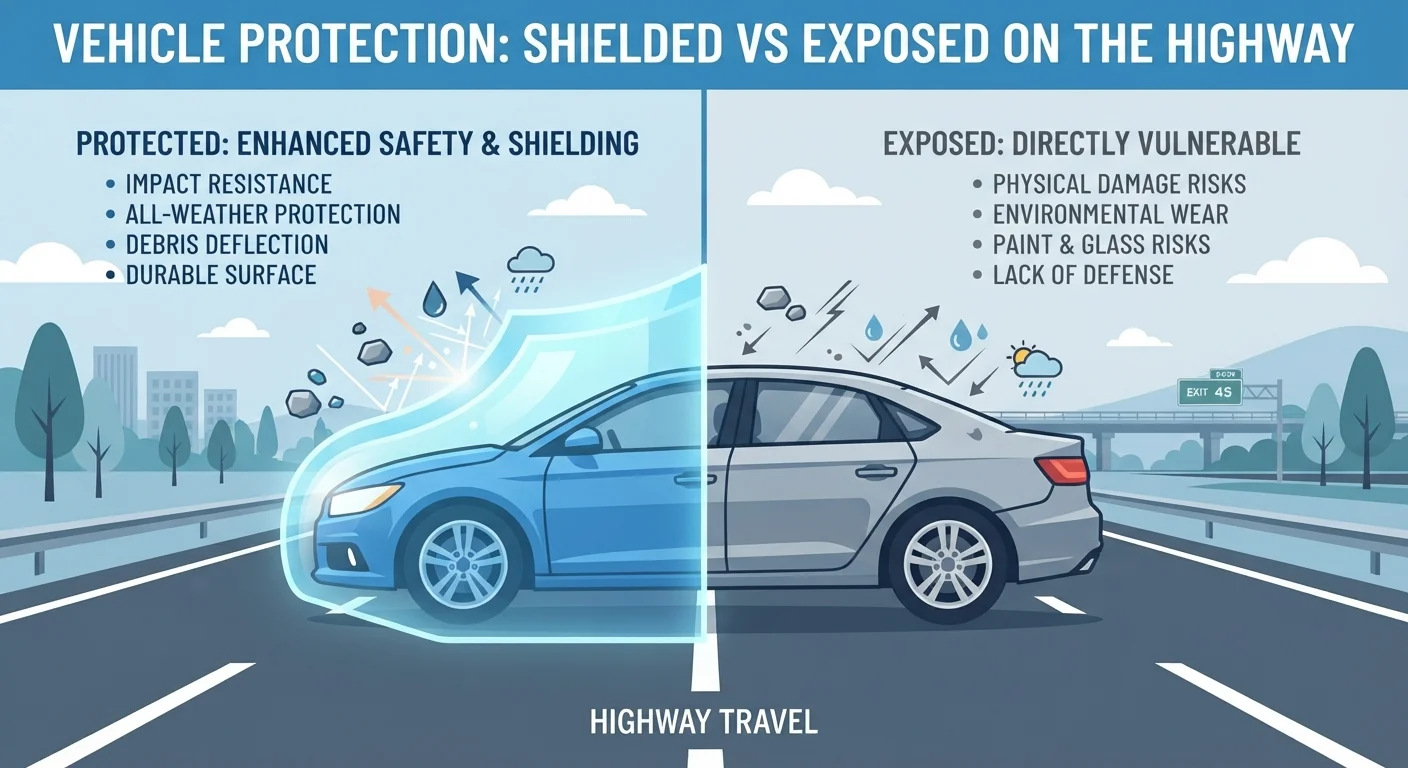
Key Takeaways
- State minimums cover damage and injuries you cause to others, not damage to your own vehicle.
- Minimum liability limits are often too low to cover the full cost of a serious accident.
- Collision and comprehensive coverage are never included in a state minimum policy.
- Several states require additional coverages such as personal injury protection or uninsured motorist coverage.
- Driving with only minimum coverage can leave you personally liable for costs that exceed your policy limits.
State minimum auto insurance
State minimum auto insurance is the lowest level of coverage a driver must carry to legally operate a vehicle in their state. Every state except New Hampshire sets a floor for liability coverage, which pays for injuries or property damage you cause to others. Meeting this minimum keeps you legal, but it does not necessarily protect your own vehicle or your own medical costs.
Minimum requirements are expressed as split limits (for example, 25/50/25) representing per-person bodily injury, per-accident bodily injury, and property damage in thousands of dollars, or as a single combined single limit.
What state minimums actually require
Every state that mandates auto insurance requires at least bodily injury liability and property damage liability. Bodily injury liability pays for medical expenses, lost wages, and legal costs for people you injure in an at-fault accident. Property damage liability covers repairs to the other driver's vehicle or any other property you damage, such as a fence or guardrail.
These two coverages are the legal floor. They exist to protect other people from your driving, not to protect you. If you are new to comparing policies, the beginner's walkthrough explains how each coverage type fits together.
Some states go further. Florida, Michigan, New York, and several others require personal injury protection (PIP), which pays your own medical bills regardless of who caused the accident. A handful of states also require uninsured motorist coverage to protect you when the other driver carries no insurance. For a plain-language breakdown of every coverage type you may encounter, see the coverage types overview.
What the minimums leave out
Collision coverage, which pays to repair your vehicle after a crash, is never part of a state minimum. Comprehensive coverage, which covers theft, fire, hail, and similar events, is also absent. If your car is totaled in a crash you caused, a minimum policy pays nothing toward your own vehicle.
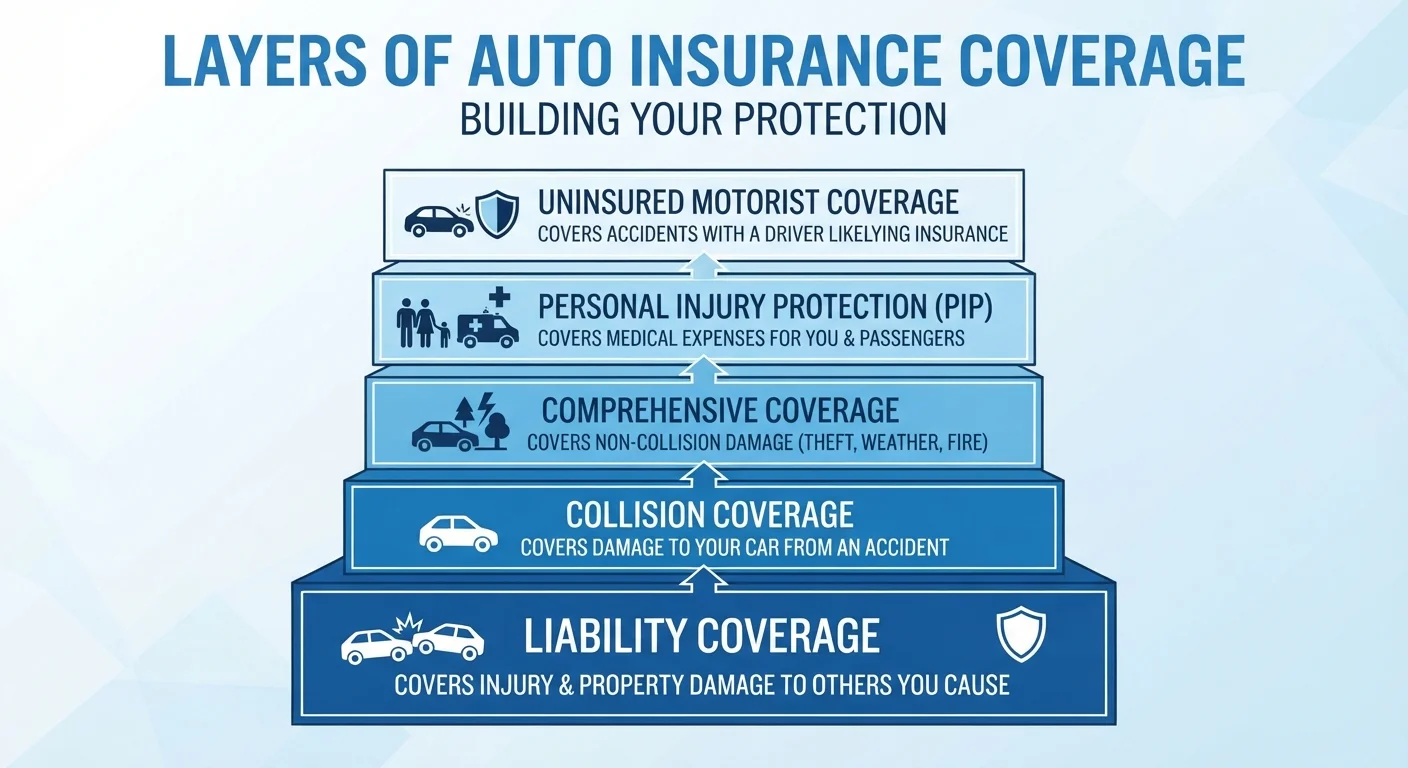
The liability limits themselves can also fall short. Many states set minimums that were last adjusted decades ago. A limit of $25,000 for property damage, for example, may not fully cover the replacement cost of a newer vehicle. When costs exceed your limit, you are personally responsible for the difference.
Minimum policies also typically exclude medical payments or PIP in states where those coverages are not mandated. If you are injured in an accident you caused, or if the other driver has no insurance, a bare minimum policy may leave your medical bills unpaid. The distinction between PIP and medical payments coverage matters here: this comparison of PIP and MedPay explains how each works.
1 in 8
Drivers estimated to be uninsured
The Insurance Research Council has estimated that roughly one in eight U.S. drivers carries no auto insurance, varying by state.
$25,000
Common state property damage minimum
Many states set their property damage liability floor at $25,000, a figure that may not cover the full cost of repairing or replacing newer vehicles.
When minimum coverage creates financial exposure
Carrying only the minimum is most risky in a few specific situations. If you drive a vehicle with significant market value, a minimum policy offers no reimbursement if that vehicle is damaged or stolen. If you drive frequently or in high-traffic areas, the chance of an accident that exceeds your liability limits increases. If you lend your vehicle to another driver, your coverage still applies in most cases, but your limits remain the same: learn how permissive use works before handing over the keys.
Financed and leased vehicles carry an additional concern. Lenders almost always require collision and comprehensive coverage as a loan condition. Dropping to the state minimum on a financed car would violate your loan agreement, and the lender may purchase its own coverage on your behalf at a much higher premium.
Reviewing your coverage at each renewal helps catch these gaps before they become costly. A structured policy renewal checklist can make that review easier.
This article is for general informational purposes only and does not constitute personalized insurance, financial, or legal advice. Coverage terms, exclusions, and state requirements vary by provider and location. Consult a licensed insurance agent or adviser for guidance specific to your situation.